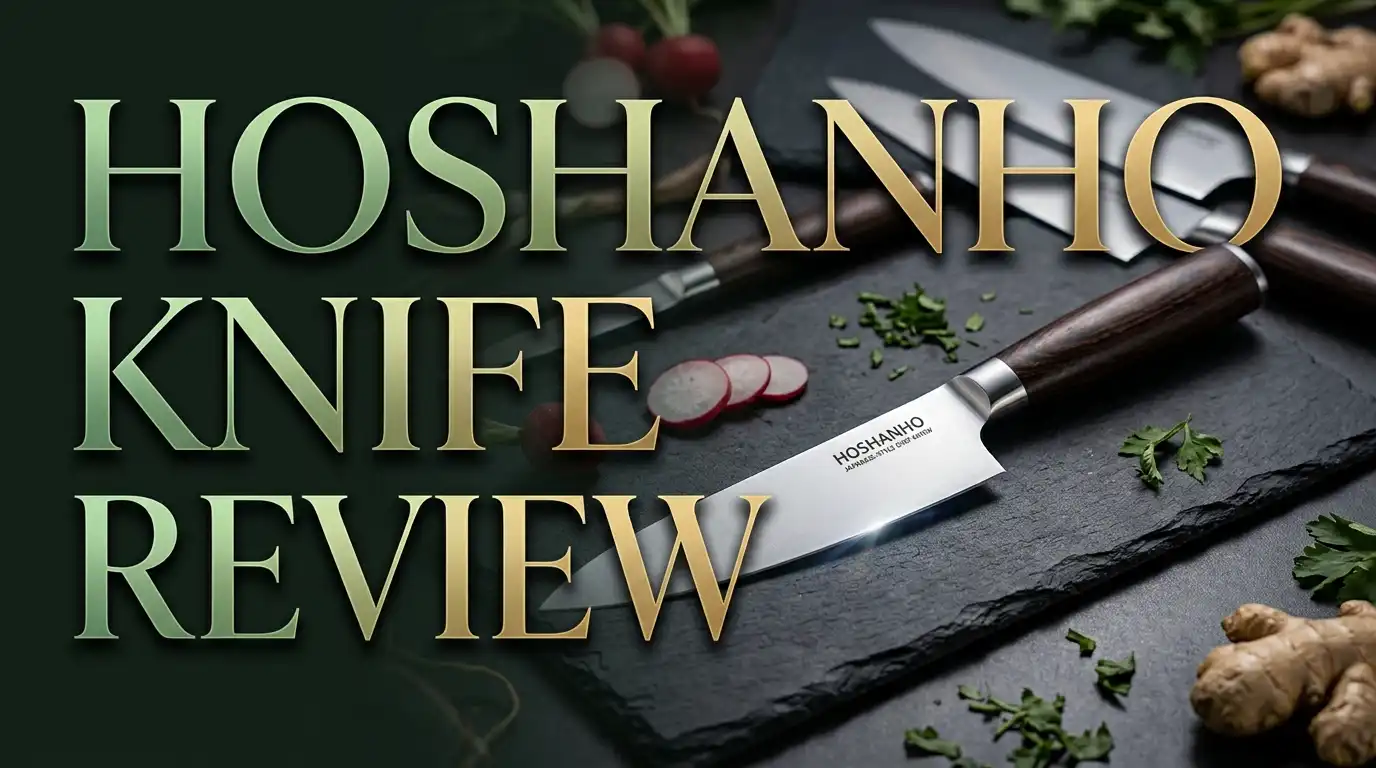
Hoshanho Knife Review 2026: Japanese Kitchen Knife Worth It?
Are you searching for a sharp, good looking kitchen knife that won’t drain your wallet? Hoshanho knives have been making waves on Amazon and social media. Home cooks and budget knife fans are talking about them. These Chinese made knives claim to use Japanese style steel and forging methods. They promise premium performance at a fraction of the cost of big name brands.
But do they actually deliver? I spent weeks testing Hoshanho knives, reading hundreds of user reviews, and comparing them to the competition. The results surprised me. Some claims hold up. Others fall flat.
In this detailed Hoshanho knife review, I cover everything from steel quality and edge retention to handle comfort and long term durability. Whether you are a home cook on a budget or a kitchen knife enthusiast looking for your next blade, this review gives you the honest truth.
Keep reading to find out if Hoshanho knives deserve a spot in your kitchen.
Key Takeaways: Hoshanho Knives In A Nutshell
- Hoshanho knives use 10Cr15MoV or AUS 10 high carbon stainless steel as their core material. This steel type offers good sharpness and decent rust resistance at a lower price point than traditional Japanese VG 10 steel.
- Out of the box sharpness is excellent. Multiple users report that Hoshanho knives arrive razor sharp and can slice through paper, tomatoes, and vegetables with minimal effort right away.
- Edge retention is solid for the price range. Several Reddit users and Amazon reviewers confirm these knives hold their edge well during daily kitchen use. Regular honing helps maintain peak performance.
- Handle comfort and build quality get mixed reviews. Some users love the Pakkawood handles for their grip and look. Others report roughness or quality control issues, especially after washing.
- These knives are made in China, not Japan. Despite the Japanese branding and marketing, Hoshanho is a Chinese brand. The “Japanese” label refers to the steel type and knife style, not the country of origin.
- For the $30 to $70 price range, Hoshanho offers strong value. They outperform many generic Amazon knives. However, they may not match established brands like Victorinox, Tojiro, or Wusthof in overall consistency and warranty support.
What Is Hoshanho and Where Do These Knives Come From?
Hoshanho is a kitchen knife brand that sells primarily through Amazon and its own Shopify powered website. The company markets itself as a maker of “Japanese kitchen knives.” However, it is important to know that Hoshanho knives are manufactured in China.
The brand uses Japanese style steel like 10Cr15MoV and AUS 10 in many of its products. These are legitimate high carbon stainless steel grades commonly used in budget to mid range kitchen knives. The name “Hoshanho” itself is a Chinese word, though the brand leans heavily into Japanese knife aesthetics in its marketing.
Hoshanho offers a wide product range. You can find individual chef knives, santoku knives, nakiri knives, and full knife sets with blocks. Prices typically range from $25 for a single knife to $100+ for multi piece sets. The brand has built a growing following on Amazon with thousands of reviews across its product listings.
Their official website features a premium “Hiro Master Limited Edition Series” with hand forged hammered finishes and lacquered rosewood handles. This shows the brand is trying to move upmarket and build a reputation for craftsmanship beyond basic budget blades.
HOSHANHO 8 Inch Chef Knife Review

- 【Japanese High Carbon Stainless Steel】HOSHANHO 8-inch chef knife blade is expertly hand-forged from a 10cr15 steel...
- 【Double-Bevel 15° Blade Edge】The Japanese knife blade is precisely polished by hand to a sharp angle of 15 degrees...
Last update on 2026-10-23 / Affiliate links / Images from Amazon Product Advertising API
The HOSHANHO 8 Inch Chef Knife is the brand’s flagship product and bestseller. It uses a 10Cr15 high carbon stainless steel core that goes through vacuum heat treatment. The blade reaches a hardness of 60 to 62 HRC, which is solid for this price range.
The knife features a hand forged construction with visible hammer marks on the blade. This is not just decorative. The hammered texture creates small air pockets between the blade and food. These pockets reduce sticking and drag during cutting, which makes slicing through potatoes, onions, and raw meat smoother.
The handle is made from Pakkawood, a stabilized wood composite that resists moisture better than natural wood. It has an ergonomic shape that fits comfortably in most hand sizes. The full tang construction adds balance and stability during use.
Out of the box, this knife arrives very sharp. Multiple reviewers confirm it can glide through paper and slice tomatoes paper thin without any pressure. For daily home cooking tasks like dicing vegetables, mincing garlic, and slicing meat, this knife performs well above its price point.
The main concern is long term consistency. Some users report that the fit and finish can vary between units. One reviewer on Reddit noted that while their knife performs well, the “fit and finish are a bit sub par” compared to established brands.
HOSHANHO 7 Inch Santoku Knife Review

- 【Ultra-tough Stainless Steel Blade】The whole blade forged with triple-layer laminated steel, made of high-end...
- 【Unique & Fashion Design】Our kitchen knife comes with frosted design, unique polishing technology and hand sharpened...
Last update on 2026-10-23 / Affiliate links / Images from Amazon Product Advertising API
The HOSHANHO 7 Inch Santoku Knife is a popular choice for home cooks who prefer the Japanese santoku style. The word “santoku” means “three virtues” in Japanese, referring to the knife’s ability to handle slicing, dicing, and mincing with equal skill.
This knife uses the same high carbon stainless steel found in the 8 inch chef knife. The shorter, wider blade makes it easier to control for people with smaller hands. It also works better for precise cuts on vegetables and boneless proteins.
Amazon live reviewers have tested this knife extensively. One detailed review showed it effortlessly slicing through paper, vegetables, and tomatoes after four weeks of regular use. This suggests the edge holds up well with normal home kitchen use.
The flat blade profile is great for push cutting and chopping on a cutting board. Unlike a western chef knife with a curved belly for rocking, the santoku excels at a straight up and down chopping motion. If you cook a lot of Asian dishes or do heavy vegetable prep, this style may suit you better.
The Pakkawood handle matches the chef knife version. It provides a secure, comfortable grip even with wet hands. The knife weighs less than the 8 inch chef knife, which reduces hand fatigue during longer cooking sessions.
HOSHANHO Damascus Chef Knife 8 Inch
The HOSHANHO Damascus Chef Knife represents the brand’s step into the premium segment. This knife features a blade made from 67 layers of Damascus steel with a 10Cr15 high carbon stainless steel core.
The Damascus pattern is not just beautiful. Each layer of steel adds strength and flexibility to the blade. The result is a knife that is both tough and sharp. The hardness rating of 62 to 64 HRC is higher than the standard Hoshanho chef knife. This means the blade holds its edge longer between sharpening sessions.
The handle material changes here too. Instead of Pakkawood, the Damascus version uses an olive wood handle. Olive wood is naturally dense, moisture resistant, and has a warm, organic look. It adds a premium feel that matches the Damascus blade aesthetics.
This knife costs more than the standard models. Expect to pay around $50 to $70 depending on current Amazon pricing. The question is whether the upgrade is worth it. For most home cooks, the standard 10Cr15 blade is sharp enough. But if you want better edge retention, a more striking appearance, and a nicer handle, the Damascus version delivers on those fronts.
The wavy Damascus pattern also serves a practical purpose. Like the hammered finish on other Hoshanho knives, it creates micro grooves that reduce food sticking to the blade surface.
Top 3 Alternatives for Hoshanho Chef Knife
If you are considering a Hoshanho knife but want to compare it to other options in the same price range, here are three strong alternatives worth checking out.
1. imarku Japanese Chef Knife 8 Inch This is one of the most popular budget chef knives on Amazon. It uses high carbon stainless steel with a Pakkawood handle. It offers similar sharpness and build quality to Hoshanho at a comparable price point.

- 🔪Multi-Functional Chef's Knife- This 8 inch chef's knife is classified as a professional multi-function imarku...
- 🔪Ultra-Sharp Edge- Sharpness is the top key of chef knives. This ultra-sharp knife blade is made from hand-forged...
Last update on 2026-10-23 / Affiliate links / Images from Amazon Product Advertising API
2. MOSFiATA 8 Inch Professional Chef Knife This knife uses German EN1.4116 stainless steel and comes with a finger guard and knife sharpener included. It is a solid choice if you prefer German steel over Japanese style steel.

- 【High Carbon German Stainless Steel Laser-engraved Pattern(Not Damascus Pattern )】 MOSFiATA 8 inch pro chef's knife...
- 【Razor Sharp Edge & Anti-Corrosion, Anti-Tarnish Blade】Processed with the unique polishing technology and hand...
Last update on 2026-10-23 / Affiliate links / Images from Amazon Product Advertising API
3. Tojiro DP Damascus Chef Knife If you can stretch your budget a bit, the Tojiro DP uses genuine VG 10 Japanese steel and is widely considered the best value chef knife under $100. It offers superior edge retention and consistent quality from a reputable Japanese brand.

- Damascus pattern on each blade is created by forging 37 layers of both low carbon and high carbon stainless steel folded...
- Bolster adds heft and balance while the blade and edge is still thin and razor sharp
Last update on 2026-10-23 / Affiliate links / Images from Amazon Product Advertising API
HOSHANHO 18 Piece Knife Set with Block

- 【18 Pieces Kitchen Knife Set】Value kitchen knives set for all your chopping needs: 8" chef knife, 8" carving knife...
- 【Professional Quality Knife Set】Knife blade are made of high carbon stainless steel(5Cr15MoV) with outstanding...
Last update on 2026-10-23 / Affiliate links / Images from Amazon Product Advertising API
The HOSHANHO 18 Piece Knife Set with Block is the brand’s most complete offering. It includes an 8 inch chef knife, 8 inch carving knife, 8 inch bread knife, 7 inch santoku knife, and several smaller utility and steak knives. The set also comes with kitchen shears and a knife sharpener.
All blades use high carbon stainless steel with a hardness of around 60 HRC. The wooden block provides organized storage and keeps your blades protected when not in use. For a household that needs a full knife set without spending hundreds of dollars, this kit covers all the basics.
The main advantage of buying a set is cost savings. Purchasing each knife individually would cost significantly more. The set gives you a bread knife for crusty loaves, a carving knife for roasts, steak knives for the dinner table, and utility knives for smaller tasks.
However, there is a trade off. In most knife sets, including this one, the quality of each individual knife may not match a standalone purchase. The chef knife in this set may not be identical to the standalone 8 inch chef knife in terms of steel grade or finishing.
If you are stocking a kitchen from scratch on a budget, this set makes practical sense. If you already have a few good knives and just need one quality chef knife, buying a single Hoshanho blade is the smarter move.
Steel Quality and Blade Construction
The steel used in Hoshanho knives is one of the most discussed aspects of the brand. The standard line uses 10Cr15MoV steel, which is a Chinese manufactured high carbon stainless steel. Some premium models use AUS 10 steel, which is a Japanese steel grade.
10Cr15MoV is similar to VG 10 in composition. Both contain high carbon content for hardness and chromium for rust resistance. The key difference is quality control during manufacturing. Japanese VG 10 from established mills tends to be more consistent. Chinese 10Cr15MoV can vary depending on the manufacturer.
The heat treatment process matters as much as the steel itself. Hoshanho claims to use vacuum heat treatment to reach 60 to 62 HRC on standard blades and 62 to 64 HRC on Damascus models. These hardness levels are good for kitchen knives. They provide a sharp edge that resists rolling and chipping under normal use.
The blade construction on most Hoshanho knives uses a 5 layer composite design. The hard steel core provides the cutting edge. Softer steel layers on each side add toughness and flexibility. This sandwich construction is common in quality Japanese style kitchen knives.
One concern raised by knife forum users is that there is no independent verification of the steel grades used. You are trusting the brand’s claims. Established brands like Tojiro and Miyabi have verified steel sourcing that you can trace back to specific mills.
Edge Retention and Sharpness
Hoshanho knives arrive extremely sharp out of the box. This is one of the most consistent points across all user reviews. The factory edge is refined enough to slice through paper cleanly and cut tomatoes without crushing them.
The real question is how long that edge lasts. Based on user reports from Reddit and Amazon, edge retention is above average for the price range. One Reddit user who owns three Hoshanho knives said they “hone and hold up to my stone well.” Another user working in a restaurant setting confirmed the nakiri version holds its edge through daily professional use.
For the average home cook who preps one or two meals per day, a Hoshanho knife should stay sharp for several weeks before needing attention. A quick pass on a honing steel every few uses extends the time between full sharpenings.
When the edge does dull, these knives respond well to whetstone sharpening. The 10Cr15MoV steel is not as hard as some premium Japanese steels. This means it is easier to sharpen at home. You do not need specialized equipment or professional sharpening services.
A 1000/3000 grit combination whetstone is ideal for maintaining Hoshanho knives. Sharpen at a 15 to 17 degree angle per side to match the factory edge geometry.
Handle Comfort and Design
Hoshanho uses Pakkawood handles on most of its knives. Pakkawood is an engineered wood composite that combines natural wood with resin. The result is a handle material that is more durable and water resistant than natural wood.
The handle shape follows an ergonomic design with a gentle curve that fits the natural grip of your hand. The full tang extends through the entire handle, which adds weight and balance to the knife. You can feel the tang’s presence when you grip the knife. This gives confidence during heavy cutting tasks.
Aesthetic appeal is a strong point for Hoshanho handles. The Pakkawood grain pattern is visible and attractive. The Damascus models use olive wood, which adds a warm, natural elegance to the knife. Both handle materials look good enough to display in an open kitchen.
However, quality control is a concern. At least one Amazon reviewer reported that handles became rough after washing, with potential for splinters. This is not a universal complaint, but it shows that manufacturing consistency can vary between units.
The best practice is to hand wash Hoshanho knives and dry them immediately. Never put them in the dishwasher. This protects both the handle material and the blade edge. A light coat of food safe mineral oil on the handle every few months helps maintain the wood’s smoothness.
How Does Hoshanho Compare to Established Brands?
This is the most important question for most buyers. How does a $40 Hoshanho chef knife stack up against a Victorinox Fibrox Pro, a Tojiro DP, or a Wusthof Pro?
In terms of raw cutting performance out of the box, Hoshanho holds its own. The initial sharpness matches or beats the Victorinox Fibrox Pro, which is the gold standard budget chef knife. The blade geometry is thinner than most western knives, which gives Hoshanho an advantage in slicing tasks.
Where established brands pull ahead is consistency and reliability. Every Victorinox or Tojiro knife that leaves the factory meets a known standard. Hoshanho’s quality can vary. You might get a flawless knife, or you might get one with a slightly off center edge or a rough handle.
Warranty and customer service also differ significantly. Brands like Wusthof offer lifetime warranties and have replaced broken knives for free. One Reddit user shared a story of Wusthof sending a brand new replacement plus a bonus santoku knife. Hoshanho’s return and warranty process has received complaints from some buyers.
If you value proven reliability and strong after sale support, go with an established brand. If you want maximum sharpness and performance per dollar and can accept some risk in quality control, Hoshanho is a strong contender.
Who Should Buy a Hoshanho Knife?
Hoshanho knives are best suited for home cooks on a budget who want a sharp, attractive kitchen knife without spending premium prices. If you cook daily and want something better than a generic supermarket knife, Hoshanho delivers a noticeable upgrade.
They also work well as a first “real” kitchen knife for someone just getting into cooking. The sharpness and build quality introduce you to what a proper knife feels like. You can learn good knife skills, practice sharpening on a whetstone, and decide later if you want to invest in a higher end blade.
Hoshanho knives are also a solid choice for a secondary or backup knife. Several Reddit users mentioned using their Hoshanho as a “beater knife” in the kitchen. This means they reach for it during rough tasks like breaking down cardboard, cutting through tough squash, or any job where they do not want to risk their expensive knife.
However, professional chefs who rely on their knives for 8+ hours daily might find Hoshanho lacking in long term durability and consistency. The steel, while good, does not match the edge retention of true VG 10 or SG2 powder steel found in premium Japanese knives.
People who are particular about fit, finish, and brand reputation may also prefer a known name like Zwilling, Henckels, or Miyabi. Brand trust matters, especially when you cannot inspect a knife before buying it online.
Maintenance Tips for Hoshanho Knives
Proper care extends the life of any kitchen knife, and Hoshanho knives benefit greatly from regular maintenance. Here are the essentials.
Always hand wash your Hoshanho knife with warm water and mild dish soap immediately after use. Dry it with a clean towel right away. Leaving the blade wet or tossing it in a sink full of dishes leads to corrosion and edge damage. The dishwasher is the fastest way to ruin any quality knife.
Use a honing steel before each cooking session. This does not sharpen the blade. It realigns the microscopic edge that bends during cutting. A few light strokes on a ceramic or steel honing rod keep your Hoshanho performing at its best between full sharpenings.
When the honing steel stops restoring sharpness, it is time for a whetstone session. Start with a 1000 grit stone for edge repair, then finish on a 3000 grit stone for a polished, sharp edge. Maintain a consistent angle of 15 to 17 degrees per side.
Store your knife properly. Use a magnetic knife strip, a knife block, or a blade guard. Tossing knives loose in a drawer dulls the edge and is a safety hazard. The 18 piece set includes a block, which solves this problem if you go with the full set.
Pros and Cons of Hoshanho Knives
Every product has strengths and weaknesses. Here is an honest summary of what Hoshanho gets right and where it falls short.
On the positive side, the sharpness out of the box is impressive. The 10Cr15MoV and AUS 10 steel grades deliver genuine cutting performance. The hammered and Damascus blade finishes reduce food sticking. The Pakkawood and olive wood handles look and feel premium. The price to performance ratio is among the best on Amazon for kitchen knives in the $30 to $70 range.
The knives also respond well to sharpening. You can maintain them at home with a basic whetstone setup. The blade geometry is thin and well suited for slicing and push cutting.
On the negative side, quality control is inconsistent. Handle roughness, off center edges, and finish variations have been reported. The brand’s marketing overstates the Japanese connection, which can feel misleading. Customer service and return handling have received complaints from some buyers.
The lack of independent steel verification is also a drawback. You trust the brand’s claims about the steel grade without third party confirmation. Established brands provide traceable steel sourcing that gives buyers more confidence.
Final Verdict: Are Hoshanho Knives Worth Buying?
Hoshanho knives offer genuine value for the price. The steel is decent, the sharpness is excellent, and the designs are attractive. For home cooks who want a capable kitchen knife under $50, Hoshanho delivers performance that competes with knives costing twice as much.
The brand is not perfect. Quality control issues, misleading Japanese branding, and mixed customer service experiences are real concerns. You are taking a calculated risk when you buy a Hoshanho knife. Most buyers end up happy with their purchase based on the thousands of positive Amazon reviews.
My recommendation? If you are on a strict budget, the HOSHANHO 8 Inch Chef Knife or the 3 Piece Knife Set gives you the best balance of quality and value. If you can stretch your budget to $70 or $80, consider the Damascus version for improved edge retention and aesthetics.
And if you want absolute reliability with zero risk, go with a Victorinox Fibrox Pro for budget western style or a Tojiro DP for budget Japanese style. Both are proven performers with decades of trust behind them.
Bottom line: Hoshanho knives are a smart buy for budget conscious home cooks who understand what they are getting and are willing to maintain their knives properly.
Frequently Asked Questions
Are Hoshanho knives really Japanese?
No. Hoshanho knives are manufactured in China. The brand uses the term “Japanese” to describe the steel type and knife style. The 10Cr15MoV and AUS 10 steels used are similar to Japanese knife steels, but the knives themselves are not made in Japan. This is a common practice among many Amazon knife brands that market Chinese made knives with Japanese styling.
What steel do Hoshanho knives use?
Hoshanho knives primarily use 10Cr15MoV high carbon stainless steel for their standard line. The Damascus models feature a 10Cr15 core surrounded by 67 layers of Damascus steel. Some models use AUS 10 steel, which is a Japanese steel grade. Both options provide good hardness in the 60 to 64 HRC range.
How long do Hoshanho knives stay sharp?
With normal home cooking use of one to two meals per day, a Hoshanho knife stays sharp for several weeks before needing honing. A full sharpening on a whetstone may be needed every two to three months depending on use frequency. Hard cutting boards like glass or ceramic will dull the edge faster. Use wood or plastic cutting boards for best results.
Can you put Hoshanho knives in the dishwasher?
No. You should never put Hoshanho knives or any quality kitchen knife in the dishwasher. The high heat, harsh detergents, and jostling against other items will damage both the blade edge and the Pakkawood handle. Always hand wash with mild soap, rinse, and dry immediately.
Are Hoshanho knives good for beginners?
Yes. Hoshanho knives are a solid starting point for beginner home cooks. The sharp edge makes food prep easier and safer since dull knives require more force and are more likely to slip. The price point is low enough that you can learn basic knife skills and maintenance without a large financial commitment.
Where can I buy Hoshanho knives?
Hoshanho knives are available on Amazon.com and the brand’s own website at hoshanho.com. Amazon typically offers the best prices, especially during sales events. The brand’s full product line includes individual knives, knife sets, and accessories like cutting boards and knife blocks.

Sanji brings years of expertise in kitchen equipment evaluation, combining practical testing with in-depth research to deliver reliable recommendations. His mission is to simplify kitchen shopping decisions through comprehensive reviews and expert comparisons.