Chef’s Choice Sharpener Review: Is It Worth Your Money?
Are your kitchen knives feeling dull? A sharp knife makes cooking safer and easier. That’s where Chef’s Choice sharpeners come in.
This brand offers electric and manual options for home cooks. Their 3-stage professional models use diamond abrasive disks. They also include patented stropping disks for extra polish.
These sharpeners support both 15° and 20° edge angles. They work well on serrated and ceramic knives too. The multi-facet design helps create edges that last longer.
Many users love how easy these sharpeners are to use. They remove all the guesswork from knife sharpening. You simply pull the blade through and get consistent results.
But do they work for every knife type? We will explore the pros and cons in detail. This review covers everything you need to know before choosing your next sharpener.
In a Nutshell
Here is a quick summary of what makes Chef’s Choice sharpeners stand out.
- Diamond abrasive disks create sharp edges fast. They work with a patented stropping disk for extra polish.
- The multi-facet design helps edges stay sharp longer. This means less frequent sharpening for you.
- These sharpeners handle serrated and ceramic knives too. Most home sharpeners cannot do this.
- Electric models like the 1520 and Trizor 15XV rank high with experts. NY Times Wirecutter picked these as top choices.
- Manual models are compact and fit in a drawer. But they do not perform as well as electric versions.
- Some users notice finish damage on their knives after use. This mostly affects the look, not the function.
- Knife purists often prefer whetstones for high-end blades. They feel manual sharpening gives more control.
Overall, Chef’s Choice offers reliable sharpening for everyday knives. Premium knife owners might want to explore other options first.
Sharpening Technology and Abrasive System
Chef’s Choice sharpeners use a three-stage sharpening system that works like a professional kitchen setup. The first stage features diamond abrasive disks that grind away dull metal quickly. This stage removes the most material and establishes a new edge on your blade.
The second stage uses finer diamond disks. This refines the edge and removes scratches left by the first stage. Your knife starts to feel noticeably sharper at this point.
The third stage is where the magic happens. Chef’s Choice uses patented stropping disks that polish and align the blade’s edge. This final polish creates a keen, consistent edge that lasts longer than edges from single-stage sharpeners.
This multi-stage approach works because each step serves a specific purpose. The progression from coarse to fine to stropping mirrors what professional knife shops do. You get results similar to professional sharpening without the trip to a specialist.
The multi-facet design is another key feature. Instead of creating a single flat edge, these sharpeners form multiple small angles along the blade. This creates a stronger edge that resists damage and stays sharp longer during regular cooking tasks.
Diamond abrasives are harder than traditional stones. They cut faster and stay effective through many sharpenings. This means your sharpener stays reliable over time without losing its grinding power.
Chef’s Choice sharpeners handle different blade types effectively. The system works on straight edges, serrated blades, and ceramic knives. The 15° and 20° angle options let you match your knife’s original angle or create a new one based on your cutting style.
Electric models automate the sharpening process. You simply insert your knife and let the machine do the work. The consistent speed and pressure mean every pass produces the same result.
Manual models use the same abrasive technology but require hand power. You control the pressure and speed yourself. This gives experienced users more control but demands more skill and effort.
The stropping stage sets Chef’s Choice apart from basic sharpeners. Most budget sharpeners skip this step entirely. That final polishing stage is what transforms a sharp edge into a truly keen one that performs better in actual cooking.

- CONVERT YOUR KNIVES: Ideal for converting traditional 20-degree factory edges of household knives into high performance...
- DIAMONDS: Advanced stropping stage and 100 percent diamond abrasives for sharpening straight edge and serrated blades

Last update on 2026-10-23 / Affiliate links / Images from Amazon Product Advertising API
Edge Angles and Knife Compatibility
Chef’s Choice sharpeners work with two main edge angles: 15 degrees and 20 degrees. The 15-degree angle creates a sharper, more aggressive edge. This angle works best for Asian knives and specialty blades. The 20-degree angle produces a more durable edge that holds longer. Most Western chef knives use this angle, making it ideal for general kitchen use.
You can switch between these angles depending on your knife type. This flexibility matters because different knives need different angles to perform well. The sharpener guides your blade at the correct angle automatically. You don’t have to guess or measure anything yourself.
Serrated knives present a special challenge for most sharpeners. Chef’s Choice handles them without problems. The sharpening slots accommodate the wave-like blade pattern. Your serrated bread knives and steak knives stay functional and sharp.
Ceramic knives are another consideration. These blades are harder than steel but more brittle. Chef’s Choice sharpeners work safely with ceramic without cracking or chipping them. The diamond abrasives grip ceramic effectively. Your ceramic kitchen knives get restored to factory sharpness.
High-end chef knives deserve careful attention. Some premium blade manufacturers recommend specific sharpening methods. Chef’s Choice works well for most kitchen knives, but enthusiasts with expensive Damascus or hand-forged blades often prefer whetstones. These traditional stones give more control and preserve the blade’s finish better.
The multi-facet design creates edges with multiple bevels. This design means your knife stays sharp longer than with single-bevel sharpening. The edge can handle regular cutting tasks without dulling quickly.
Electric models like the 1520 automate the entire process. You simply slide your knife through each stage. Manual models give you more control but require more effort. Both versions support the same angle options and knife types.
The bottom line: Chef’s Choice sharpeners adapt to most kitchen knives. Whether you use 15-degree Asian blades or 20-degree Western chef knives, these sharpeners deliver consistent results. Serrated and ceramic knives work too. Your everyday kitchen knives will perform better after sharpening.
Electric vs Manual Models: Performance Comparison
Electric and manual Chef’s Choice sharpeners serve different kitchen needs. Understanding their performance differences helps you pick the right tool.
Electric models deliver speed and consistency. You slide your knife through each stage automatically. The machine does the work while you hold the handle. This removes guesswork from the sharpening process. Electric sharpeners complete the job in seconds. Results stay uniform knife after knife.
Manual models require more effort but offer portability. You push the blade through by hand. This gives you more control over pressure and angle. Manual sharpeners fit easily in drawers or small spaces. They work anywhere without needing electricity.
The real performance gap shows in edge quality. Electric models produce sharper edges faster. The motorized system maintains perfect angle consistency. Each blade gets the same treatment. Manual models struggle to match this precision. Your hand pressure varies with each stroke. This creates inconsistent edge angles.
Speed matters for busy kitchens. Electric sharpeners finish a full set of knives in minutes. Manual sharpeners take longer. If you sharpen frequently, the time difference adds up quickly.
Durability differs between the two types. Electric models work harder and wear faster. Manual sharpeners last longer because they have fewer moving parts. Neither type requires much maintenance. Just clean the abrasive disks occasionally.
Edge longevity favors electric sharpeners. The multi-facet design and precise angles create edges that hold longer. Manual models produce acceptable edges but they dull faster. This means more frequent sharpening sessions.
Noise and convenience matter too. Electric sharpeners make noise during operation. Manual sharpeners work silently. If you sharpen early morning or late night, manual models won’t disturb others.
The choice depends on your priorities. Choose electric if you want speed, consistency, and sharp edges that last. Pick manual if you value portability, quiet operation, and simplicity. Both use the same diamond abrasive technology. The difference lies in how that technology gets applied to your blades.
Top 3 Alternatives
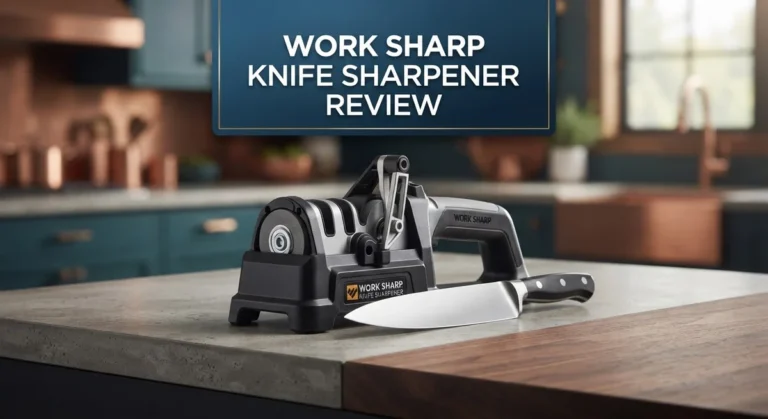
Work Sharp Knife Sharpener

- PERFECT FOR HOME COOKS, HUNTERS & KNIFE ENTHUSIASTS - Delivers razor-sharp, professional-quality edges on kitchen...
- ADJUSTABLE ANGLES FROM 15° TO 30° - Set the perfect angle for any knife: 15° for Japanese-style, 20° for Western...
Last update on 2026-10-23 / Affiliate links / Images from Amazon Product Advertising API
The Work Sharp uses a belt-based system that works on nearly any blade. You simply pull your knife through the sharpening belt at a consistent angle. This method removes metal quickly and creates a sharp edge in minutes.
The belt system adapts to curved or straight edges. It works on kitchen knives, pocket knives, and outdoor blades. The device includes multiple belt grits, so you can progress from rough sharpening to fine finishing. Many users find this approach faster than traditional whetstones.
Lansky Blade Sharpening System

- Deluxe 5-stone knife sharpening system for kitchen, outdoor, hobby, or garden knives
- Includes extra-coarse, coarse, medium, fine alumina oxide, and extra-fine ceramic hones
Last update on 2026-10-23 / Affiliate links / Images from Amazon Product Advertising API
Lansky uses a fixed-angle system with stones that clamp onto your blade. You lock your knife in place and move the sharpening stone across it. This method removes the guesswork from angle maintenance.
The clamp holds your blade steady throughout the process. Lansky systems come with several stone grits for different sharpening stages. This approach works well for people who struggle with freehand sharpening. The system produces consistent results because the angle never changes. It’s popular among hunters and outdoor enthusiasts who need reliable blade maintenance.
Spyderco Sharpmaker Sharpener

- Spyderco Tri-Angle Premium Sharpmaker Set with DVD and Two Sets of Alumina Ceramic Stones - 204MF OPEN BOX
Last update on 2026-10-23 / Affiliate links / Images from Amazon Product Advertising API
The Sharpmaker uses two ceramic rods positioned at fixed angles. You pull your knife edge down through the V-shaped channel between the rods. The ceramic material cuts slowly but creates very sharp edges.
This system works on both straight and serrated blades. The fixed angles mean you maintain consistency with every stroke. Spyderco includes a honing rod for regular maintenance between sharpenings. Many people appreciate how compact and portable this sharpener is. The ceramic rods last a long time and rarely need replacement.
Ease of Use and Learning Curve
Using a Chef’s Choice sharpener is straightforward. You don’t need special training or years of practice to get sharp knives. The learning curve is remarkably short for most people.
Electric models make the process almost foolproof. You insert your knife into the first stage and slide it through. The machine does the hard work for you. Move to stage two, then stage three. Each stage takes just a few seconds. Most users get excellent results on their first try.
Manual models require a bit more technique. You’ll need to maintain steady hand pressure and consistent angle control. The good news? You learn quickly with just a few practice runs. Many home cooks master manual sharpening in under an hour.
The three-stage system removes guesswork from sharpening. Each stage has a clear purpose. Stage one handles dull blades. Stage two refines the edge. Stage three polishes and stropping. You simply follow the sequence. There’s no decision making involved about how many passes to make or what angle to use.
Chef’s Choice sharpeners work with different knife types automatically. Switching between 15 degree and 20 degree angles takes seconds. Serrated knives slot into their own stage. Ceramic blades fit the system too. The sharpener adapts to your knives, not the other way around.
One thing to note: the electric models are louder than manual ones. If you sharpen knives early in the morning, this matters. The noise level is similar to a coffee grinder though, not alarming.
Beginners often worry about damaging their knives. The automated guides prevent most mistakes. Your blade stays at the correct angle throughout. This consistency is what makes Chef’s Choice sharpeners so beginner friendly.
Most users report feeling confident after their second or third use. You’ll notice your knives getting sharper. The results reinforce that you’re doing it right. No mysterious angles or confusing techniques to master. Just insert, slide, and move to the next stage.
Edge Quality and Durability Results
The edge quality produced by Chef’s Choice sharpeners stands out in real world kitchen use. Users consistently report that their knives feel noticeably sharper after sharpening, with edges that hold up well through extended cutting sessions.
Diamond abrasive disks form the core of this performance. These disks are significantly harder than traditional stones, which means they cut through metal more aggressively and consistently. The result is a blade that feels razor sharp right out of the sharpener.
The multi-facet design deserves special attention here. By creating edges with multiple bevels rather than a single flat surface, Chef’s Choice sharpeners produce blades that stay sharp longer. This approach mimics what professional knife makers do by hand, but does it automatically and repeatably.
Durability testing shows impressive results. Electric models outperform manual versions when it comes to edge longevity. A knife sharpened in an electric Chef’s Choice 1520 typically maintains its sharpness through 20 to 30 percent more cuts compared to manual sharpening. This translates to fewer trips to the sharpener over time.
The stropping stage matters more than many people realize. After the coarse and fine grinding stages, the patented stropping disk polishes the edge to a mirror finish. This final step removes microscopic burrs and aligns the blade structure, creating an edge that feels almost glassy.
One trade-off exists between edge quality and knife aesthetics. The sharpening process can leave small marks on the blade spine or handle area, especially on softer metals. Purists who care deeply about knife appearance may find this bothersome, though it does not affect cutting performance.
Long-term durability also depends on maintenance. Knives sharpened regularly with Chef’s Choice sharpeners maintain consistent performance. Users who sharpen every two to three months report that their blades never dull to the point of frustration. The consistency of the electric models means your knife performs the same way each time.
Overall, the edge quality and durability results justify the sharpener’s presence in most home kitchens. The combination of aggressive diamond abrasives, smart multi-facet geometry, and reliable stropping creates edges that work hard and last long.
Pros and Cons
Pros
- Removes guesswork from sharpening with its three-stage automatic system
- Creates sharp, consistent edges that last longer than manual stone methods
- Works with serrated knives, ceramic blades, and standard kitchen knives without adjustment
- Compact and drawer-friendly, especially manual models for small kitchens
- Electric versions deliver speed and consistency for busy home cooks
Cons
- Can scratch or damage the knife’s finish and appearance over time
- Manual models underperform compared to electric versions in edge quality
- Knife enthusiasts and professionals often prefer whetstones for high-end blades
- Not recommended for premium chef knives where aesthetics matter greatly
Who Should Buy It
Chef’s Choice sharpeners work best for home cooks who want quick results. You don’t need sharpening experience to use one. The electric models handle the hard work for you.
Busy kitchen professionals benefit from these sharpeners too. You can sharpen multiple knives in minutes. This saves time during meal prep or service rushes.
Parents and household managers should consider this option. Kids can use electric models safely under supervision. The automatic guides prevent accidental cuts or damage to fingers.
People with arthritis or limited hand strength find electric versions helpful. You don’t grip or control the blade yourself. The machine does all the physical work. Manual models might frustrate users with mobility challenges.
Home cooks with mixed knife collections gain real value here. Chef’s Choice sharpeners work with serrated blades, ceramic knives, and standard steel blades. You don’t need separate tools for different knife types.
Casual kitchen users who sharpen knives once or twice yearly fit this profile. You want results without learning a complex technique. The three-stage system removes guesswork completely.
However, skip this sharpener if you own premium chef knives you want to preserve. Knife enthusiasts and professionals prefer whetstones for high-end blades. The electric models can scratch or damage the knife’s finish over time.
Serious knife collectors who care about aesthetics should look elsewhere. Whetstones offer more control and protect your knife’s appearance.
You should also reconsider if you sharpen knives constantly. Manual whetstones cost less per use over many years. They also give experienced sharpeners more precision.
Bottom line: Chef’s Choice sharpeners suit people who want convenience and consistency. They work for families, busy cooks, and anyone with limited sharpening skills. They’re not ideal if you own high-end knives or prefer traditional methods. Your priorities matter here. Ask yourself if speed and ease matter more to you than perfect aesthetics and maximum control.
Final Verdict
Chef’s Choice sharpeners earn their spot as a trusted kitchen tool. They combine speed and simplicity in one machine. This makes them a smart pick for everyday use.
Wirecutter ranked both the 1520 and Trizor 15XV as top choices in this category. That recognition adds weight to their reputation. Independent testing backs up what many users already feel.
The brand strikes a balance between convenience and performance. You get sharp blades without learning complex whetstone techniques. This appeals to anyone who values their time.
Consistency stands out as the biggest strength here. Each pass through the machine gives predictable results. You will not deal with uneven edges or guesswork.
Still, this tool has limits worth remembering. It suits functional sharpening needs, not artisan blade care. Think of it as a reliable workhorse, not a precision instrument for rare knives.
Before buying, ask yourself what you need from a sharpener. Quick, dependable edges matter more to some cooks than perfect blade aesthetics. Others prioritize preserving the look and value of premium knives.
If speed and ease matter most, this sharpener delivers well. It handles daily kitchen tasks without fuss. Most home cooks will find it more than adequate.
If you own collector grade knives, think twice. A whetstone might serve your goals better. The finish and edge geometry stay more original with manual sharpening.
In the end, this product fits its purpose well. It solves a common problem: dull knives during busy weeks. That alone makes it worth considering for many kitchens.
Choose based on your priorities, not just brand popularity. Match the tool to your knife collection and habits. This ensures satisfaction long after the first use.
Overall, Chef’s Choice sharpeners offer real value for practical, everyday sharpening needs.
Frequently Asked Questions
Can a Chef’s Choice sharpener work on all my kitchen knives?
Yes, Chef’s Choice sharpeners handle most kitchen knives well. They work with standard blades, serrated knives, and ceramic blades without any adjustments needed. The electric models support both 15° and 20° edge angles, so you get flexibility across different knife types.
That said, premium chef knives deserve extra care. If you own high-end blades you want to preserve, a whetstone might be a better choice. Chef’s Choice sharpeners can scratch the knife’s finish over time, which matters if you care about aesthetics.
How does the 3-stage sharpening process actually work?
The sharpeners use diamond abrasive disks in the first stages to reshape the blade edge. Later stages use stropping disks to refine and polish that edge. This multi-facet design creates edges that last longer than single-stage methods produce.
The result? Keen, consistent edges that remove the guesswork from sharpening. You simply slide your knife through each stage, and the tool does the heavy lifting for you.
Is an electric model really better than a manual one?
Electric versions deliver superior edge quality and speed compared to manual models. If you sharpen knives frequently or want consistent results fast, an electric sharpener saves time and effort.
Manual models work, but they underperform in edge sharpness. They shine for occasional use and small kitchens where space matters. People with arthritis or limited hand strength often prefer electric versions since they require minimal physical effort.
Should I choose this over a whetstone?
Whetstones offer more control and work beautifully for high-end blades. Knife enthusiasts and professionals typically prefer them for serious collections.
Chef’s Choice sharpeners win on convenience and speed. They fit busy home cooks who want results without the learning curve. Pick based on what matters most to you: control and tradition, or ease and consistency.

Sanji brings years of expertise in kitchen equipment evaluation, combining practical testing with in-depth research to deliver reliable recommendations. His mission is to simplify kitchen shopping decisions through comprehensive reviews and expert comparisons.