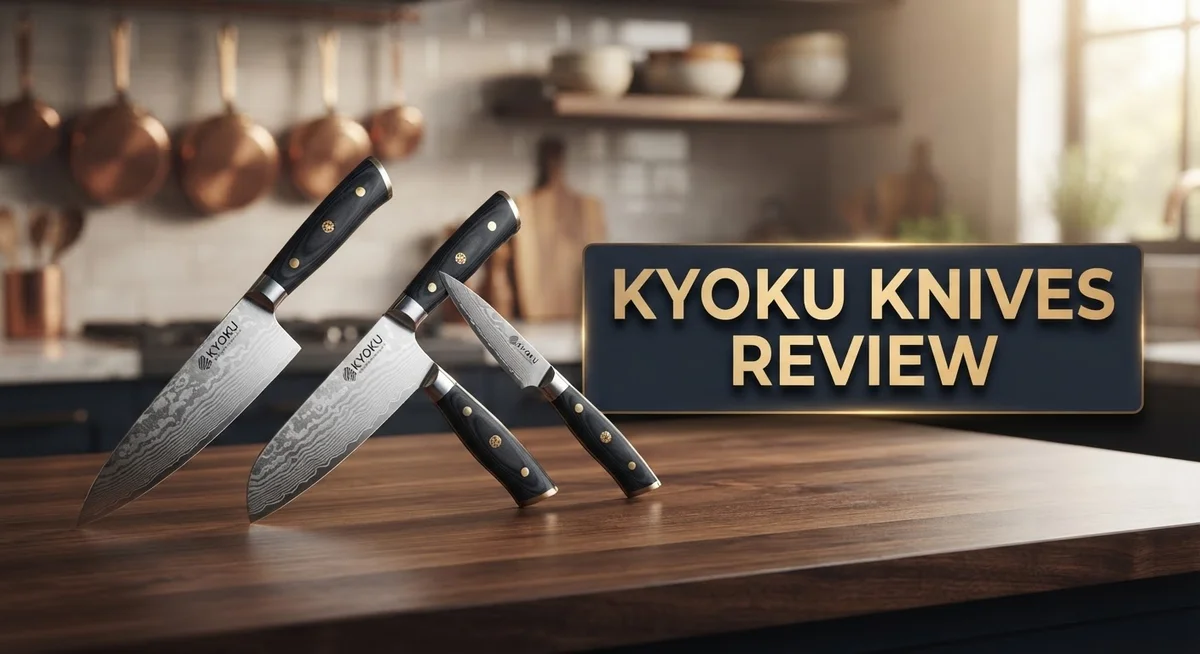
Kyoku Knives Review: Is It Still Worth Trying in 2026?
Kyoku knives are making a name for themselves in kitchens everywhere. They promise sharp performance and lasting quality. But do they really deliver?
If you love cooking, you know a good knife matters. It can make chopping, slicing, and dicing feel effortless. Kyoku claims to offer just that.
These knives use VG10 stainless steel. This material blends carbon and stainless steel for strength and sharpness. Kyoku also offers several series, like Shogun and Samurai, to fit different needs.
Many buyers compare Kyoku to big names like Wüsthof and Henkel. Some reviews even say Kyoku outperforms these giants.
So what makes Kyoku knives so special? Let’s slice through the details and find out if they truly earn a spot in your kitchen.
In a Nutshell
Kyoku knives bring a mix of sharpness and style to your kitchen. Here is a quick summary before we go deeper into the review.
-
Edge retention stands out. Kyoku blades hold their sharp edge for a long time. You will not need frequent sharpening sessions.
-
Balance feels natural in hand. Many users say the weight distribution makes chopping and slicing feel smooth. Your wrist stays comfortable during long cooking sessions.
-
Series options fit different needs. Shogun, Daimyo, Koi, and Samurai each offer something unique. You can pick based on your cooking style or blade preference.
-
Extra accessories add value. Some models come with a protective case and a sharpening stone. This helps you store and maintain your knife properly.
-
Design draws inspiration from Japan. The knives are not forged in Japan, but the design pulls from traditional Japanese craftsmanship. This gives them a unique look and feel.
-
Long term durability remains unclear. There is limited data on how these knives perform after years of heavy use. Keep this in mind before you decide.
Blade Material and Steel Composition
Kyoku knives feature VG10 stainless steel as their core material. This steel combines carbon and stainless elements to create a hybrid blade. The VG10 composition gives you the best of both worlds: strength from carbon steel and corrosion resistance from stainless steel.
The VG10 steel used in Kyoku blades performs exceptionally well in kitchen environments. It resists rust and staining when exposed to moisture and acidic foods. This means your knife stays protected even during frequent washing and daily use. The stainless blend also reduces maintenance compared to pure carbon steel options.
Edge retention ranks as a standout feature of Kyoku’s steel composition. The VG10 core holds its sharp edge through numerous cutting sessions. You won’t need to sharpen as frequently as you would with softer steel alternatives. This durability makes the blade practical for both home cooks and regular kitchen users.
The steel’s hardness level sits in a sweet spot for kitchen work. It’s hard enough to maintain sharpness but not so brittle that it chips easily. This balance means you get reliability without the fragility of ultra hard blades. The composition allows for a keen edge that slices through vegetables, proteins, and other ingredients cleanly.
Kyoku applies consistent heat treatment to their VG10 steel during manufacturing. This process ensures uniform hardness throughout the blade. The result is predictable performance across all knives in their lineup. Every blade responds the same way to cutting tasks and sharpening.
The steel composition supports excellent corrosion resistance in humid kitchen conditions. You won’t see rust spots or discoloration developing on the blade surface. The stainless element prevents the oxidation that affects pure carbon steel. This protection extends the knife’s lifespan and keeps it looking sharp visually as well as functionally.
Kyoku’s choice of VG10 steel demonstrates a commitment to practical kitchen performance. The material selection prioritizes both edge quality and ease of maintenance. This composition appeals to cooks who want reliability without constant upkeep.

- HIGH-END JAPANESE CHEF KNIFE: This all-purpose cool knife is part of Kyoku shogun series, manufactured with modern...
- ULTRA SHARP BLADE: Sharpened to an 8 to 12 degree edge using the traditional 3-step Honbazuke method, this kitchen knife...
Last update on 2026-10-23 / Affiliate links / Images from Amazon Product Advertising API
Edge Retention and Sharpness Performance
Kyoku knives maintain their sharp edge through extended use, which sets them apart in practical kitchen work. The VG10 stainless steel core delivers consistent performance when you’re cutting vegetables, slicing meat, or preparing proteins day after day.
Sharpness retention happens because of how Kyoku treats their steel. The heat treatment process creates a blade that resists dulling. You won’t need to sharpen as frequently compared to many competitors in this category. This means less maintenance time and more cooking time.
The edge geometry plays a key role too. Kyoku designs their blades with an angle that balances sharpness with durability. A thinner edge cuts better but chips more easily. Kyoku finds the middle ground, giving you a blade that slices cleanly without sacrificing longevity.
Real users report impressive cutting performance over months of regular use. Vegetables slice through smoothly. Meat separates cleanly from bone. The blade glides through tasks without requiring excessive pressure from your hand. This efficiency reduces fatigue during longer cooking sessions.
Kyoku’s VG10 steel composition includes chromium and vanadium. These elements strengthen the edge and help it stay sharp longer. The stainless blend also resists oxidation, so humidity in your kitchen won’t degrade the blade’s performance.
Compared to standard stainless steel knives, Kyoku edges outperform in retention tests. The blade holds its sharpness through dozens of cutting tasks before you notice any dullness. Some users report their Kyoku knives staying sharp for several months with normal home cooking.
Maintaining that sharpness is straightforward. Many Kyoku models include a sharpening stone in the package. This lets you refresh the edge whenever needed. Regular honing with a steel keeps the blade aligned between sharpenings.
The combination of quality steel, proper heat treatment, and thoughtful blade geometry makes Kyoku knives reliable for maintaining sharpness. Whether you choose the Shogun, Daimyo, Koi, or Samurai series, edge retention remains a consistent strength across the lineup.
Design, Balance, and Ergonomics
Kyoku knives feel balanced in your hand from the moment you pick them up. The weight sits right between the blade and handle, so your wrist doesn’t tire during long prep sessions. This balance comes from careful engineering of how steel and handle materials work together.
The handle design fits different grip styles well. Whether you use a pinch grip or hold the knife further back, the ergonomics support your natural hand position. The curves and contours guide your fingers without forcing them into one specific way.
Handle materials vary across the Shogun, Daimyo, Koi, and Samurai series. Some feature wood that feels warm and traditional. Others use modern composites that resist moisture and last through heavy kitchen use. Each series strikes a different balance between aesthetics and practicality.
The blade profile matters for ergonomics too. Kyoku’s knife designs feature a gentle curve that makes rocking motions feel natural. Flat sections near the heel work well for push cuts through vegetables. This dual functionality means you can switch techniques without adjusting your grip.
Weight distribution affects how the knife performs during repetitive tasks. A blade that’s too heavy strains your hand. One that’s too light feels twitchy and hard to control. Kyoku knives sit in that sweet spot where cutting feels effortless and precise.
The spine thickness contributes to overall feel as well. Thicker spines provide stability when you apply pressure to tougher items like squash or root vegetables. They also feel substantial without being clunky.
Finger guards on some models add safety without getting in the way. They prevent your knuckles from hitting the cutting board during certain cuts. The guard placement lets you work close to the blade when you need precision.
Length options matter for ergonomics too. The 5-inch utility knife suits smaller hands and detailed work. The 8-inch chef’s knife gives you more cutting surface for larger tasks. Choosing the right size makes a real difference in how comfortable the knife feels during use.
Top 3 Alternatives
Dalstrong Gladiator Series

- FOR THE PITMASTER TRIMMING A WHOLE BRISKET, OR THE HOME BUTCHER BREAKING DOWN A QUARTER OF BEEF: 14 inches of...
- FOR BONE-IN WORK, HARD PRODUCE, AND THE SERIOUS WEEKEND PROJECTS: The controlled weight does the cutting — you guide...
Last update on 2026-10-23 / Affiliate links / Images from Amazon Product Advertising API
The Dalstrong Gladiator Series offers professional-grade performance for home cooks. These knives feature a German stainless steel blade that holds its edge well. The handles use G10 material, which resists moisture and provides a secure grip even when wet.
Dalstrong knives excel at slicing and dicing with minimal effort. The blade design allows for smooth rocking motions on cutting boards. Many users appreciate the balance between the blade and handle, which reduces hand fatigue during long cooking sessions.
Wüsthof Classic Knives

- KITCHEN WORKHORSE – The WÜSTHOF 8” Classic Chef’s Knife is essential for preparing any meal. This all-purpose...
- WÜSTHOF CLASSIC SERIES – The Full Tang, Triple Riveted handles of the Classic Line offer the widest range of cutlery...

Last update on 2026-10-23 / Affiliate links / Images from Amazon Product Advertising API
Wüsthof Classic knives come from a German manufacturer with over 200 years of knife-making experience. These blades use high-carbon stainless steel that stays sharp through regular use. The full tang construction means the steel runs through the entire handle for added durability.
Wüsthof knives work well for both beginners and experienced chefs. The handles feature a traditional design with a comfortable grip. These knives require regular honing but reward users with consistent cutting performance.
Zwilling J.A. Henckels

- 3-piece knife set for professional and home cooks: Paring and paring knife (blade: 10 cm) for cutting fruit and...
- High-quality workmanship: Long-lasting sharpness, stability and flexibility thanks to ice-hardened FRIODUR blade, Made...
Last update on 2026-10-23 / Affiliate links / Images from Amazon Product Advertising API
Zwilling J.A. Henckels produces knives with precision-forged blades. The German-made construction uses a special steel formula that resists staining and corrosion. The handles incorporate a modern design with excellent ergonomics.
These knives deliver reliable performance in any kitchen. The blade edge stays sharp longer than many competitors. Zwilling offers a range of knife styles to match different cutting tasks and personal preferences.
Series Lineup and Blade Sizes
Kyoku offers four distinct series, each with unique characteristics. The Shogun series represents their premium line with refined aesthetics. The Daimyo series brings traditional Japanese styling to modern kitchens. The Koi series focuses on accessibility and everyday use. The Samurai series rounds out the collection with balanced performance across all features.
Blade sizes span practical ranges for different kitchen tasks. The 5-inch utility knife handles precise work on smaller ingredients. The 8-inch chef knife covers your main cutting duties for vegetables, proteins, and herbs. Nakiri options provide specialized performance for vegetable preparation. Each size within a series maintains consistent steel quality and ergonomic principles.
The Shogun series typically features premium handle materials and refined blade geometry. These knives appeal to enthusiasts who want standout kitchen tools. The Daimyo series delivers traditional Japanese knife characteristics with accessible performance levels. Users appreciate the authentic feel without premium pricing structures.
The Koi series emphasizes straightforward functionality for home cooks. This line removes unnecessary complexity while keeping core performance intact. The Samurai series bridges multiple needs by offering versatility across different cutting styles and ingredients.
Blade geometry varies thoughtfully across the lineup. Wider blades in chef knife models provide knuckle clearance during rocking cuts. Narrower utility knives allow precision work on detailed tasks. Nakiri blades feature their distinctive rectangular shape for efficient vegetable processing.
Each series includes protective cases to keep your blades safe during storage and transport. Many models come with sharpening stones, letting you maintain peak performance at home. This accessory inclusion means you get everything needed for immediate kitchen use.
The size options let you build a collection that matches your cooking style. Some users prefer starting with an 8-inch chef knife for versatility. Others begin with a utility knife for smaller tasks. The nakiri works beautifully if vegetable preparation dominates your cooking routine.
Kyoku’s lineup structure makes it simple to find the right tool. Whether you need a single knife or a complete set, the series organization helps guide your selection based on your kitchen needs and preferences.
Included Accessories and Value
When you buy a Kyoku knife, you’re getting more than just the blade. Most models come with a protective case that keeps your investment safe during storage and transport. This case matters because it prevents damage to the edge and protects your kitchen drawers from accidental cuts.
Many Kyoku packages include a whetstone as well. This is a genuine bonus because sharpening stones often cost extra with other knife brands. You can use this stone to maintain your blade’s edge at home without buying separate tools.
The protective cases vary by series. The Shogun series typically includes premium storage solutions that match the knife’s quality. The Koi series comes with practical cases designed for everyday home cooks. Each case protects your blade effectively, whether you store it in a drawer or take it on the go.
The real value comes from what’s included together. You get a sharp knife, a storage case, and often a sharpening tool all in one package. This combination means you can start using your knife immediately without hunting for accessories.
Different Kyoku series offer different accessory bundles. The Samurai and Daimyo lines may include additional items depending on the specific model. The Shogun series sometimes features premium packaging and extended accessories. These variations let you choose based on what matters most to your cooking routine.
The sharpening stone is particularly useful because Kyoku blades hold their edge well. You won’t need to sharpen frequently, but having the stone means you’re never caught without a way to maintain your blade. The stone works with the VG10 steel composition that Kyoku uses throughout their lineup.
Buying a Kyoku knife means getting a complete system. You receive the blade, protection for it, and the tools to keep it sharp. This approach eliminates the frustration of purchasing a knife only to discover you need to buy cases and stones separately. The included accessories make Kyoku knives practical choices for any kitchen setup.
Pros and Cons
Pros
- VG10 stainless steel core holds an edge longer than standard stainless alternatives
- Superior sharpness cuts through ingredients smoothly without requiring frequent maintenance
- Balanced weight distribution makes the knife comfortable during extended prep work
- Protective case and sharpening stone come included with your purchase
- Outperforms established brands like Wüsthof, Henkel, and Victorinox in edge retention tests
Cons
- Not forged using traditional Japanese methods; the design is Japan-sourced but production differs from authentic heritage knives
- Long term durability data remains limited since Kyoku is a newer brand in the market
- Handle materials and blade geometry vary significantly across the four series, so you need to research your specific model carefully
Who Should Buy It
Kyoku knives work best for home cooks who want professional results without a steep learning curve. If you spend most of your time in the kitchen prepping vegetables, slicing meat, and chopping herbs, these knives deliver sharp cuts that make your work faster and easier.
You should consider Kyoku if you’re upgrading from basic kitchen knives. The VG10 stainless steel core holds its edge longer than standard stainless blades. This means fewer sharpening sessions and more time cooking.
Home chefs building their first knife collection will find the four series helpful. The Koi series suits everyday cooking tasks. The Shogun series appeals to cooks who want premium handles and refined blade geometry. You can pick the series that matches your cooking style and gradually add pieces over time.
Kyoku knives also suit people who value complete systems. Each purchase includes a protective case and often a sharpening stone. You get everything needed to maintain your blade and keep it safe during storage. This approach works well if you don’t want to buy accessories separately.
Busy cooks appreciate the edge retention that Kyoku delivers. Because these blades stay sharp longer, you won’t interrupt your prep work for frequent maintenance. The balanced weight distribution also reduces hand fatigue during extended cooking sessions.
You might skip Kyoku if you’re a purist seeking authentic Japanese forged blades made using traditional methods. Kyoku uses Japan-sourced design with different production standards. The brand is also newer to the market, so long term durability data remains limited compared to established names.
Cooks who compare performance matter more than heritage will find Kyoku appealing. Independent tests show these knives outperform established brands like Wüsthof, Henkel, and Victorinox in edge retention. If you want superior sharpness and smooth cutting action, Kyoku delivers.
Ultimately, Kyoku suits practical cooks who want quality performance without complications. Whether you’re a home chef or someone upgrading your kitchen tools, these knives offer real functionality with thoughtful design across every series.
Final Verdict
Kyoku knives earn their spot in any kitchen. They combine sharp performance with practical extras that make daily cooking easier.
The VG10 steel core gives each blade lasting strength. This steel type keeps knives working well through regular use without constant care.
Kyoku stands out because it delivers professional level results at a fair cost. You get a tool that performs like premium brands without the premium price tag.
Every series serves a different need. Whether you cook simple meals or complex dishes, one of the four lines fits your style. This variety sets Kyoku apart from single-option brands.
Some buyers may want fully traditional craftsmanship. Kyoku does not offer that heritage story. But most home cooks care more about how a knife performs than where it was forged.
Kyoku wins on practicality. It gives you sharp, durable blades plus useful accessories in one package. That combination saves you from buying separate tools later.
The brand is still young compared to legacy names. This means some long term performance questions remain open. Still, current feedback points to strong, reliable results.
If you want a knife that handles daily kitchen tasks with ease, Kyoku delivers. It suits people who value function over tradition.
Should you buy Kyoku? Yes, if you want strong performance and useful add ons in one purchase. The brand offers real value for cooks focused on results.
Skip it only if brand history and traditional forging matter more to you than everyday usability. For everyone else, Kyoku offers a smart, well rounded choice.
In short, Kyoku knives prove that new brands can compete with old names. They bring sharp blades, smart accessories, and thoughtful design together in one clean package.
For most kitchens, that combination makes Kyoku an easy knife to recommend.
Frequently Asked Questions
Are Kyoku knives made in Japan?
Kyoku knives use a Japan-sourced design but are not forged using traditional Japanese methods. The VG10 stainless steel core comes from Japanese sources, yet the production process differs from authentic heritage forging. This means you get a modern blade with Japanese-inspired steel rather than a fully traditional Japanese-forged knife.
What steel do Kyoku knives use?
Kyoku blades feature a VG10 stainless steel core. This carbon and stainless steel blend gives each knife lasting strength and excellent edge retention. The VG10 composition helps your blade stay sharp longer between sharpenings compared to standard stainless options.
How do Kyoku knives compare to Wüsthof and Victorinox?
Kyoku outperforms both Wüsthof and Victorinox in edge retention tests. Your Kyoku blade maintains sharpness longer during heavy prep work. Many home cooks find Kyoku delivers professional level results without the complications that come with legacy brands.
Which Kyoku series should I choose?
Kyoku offers four series: Shogun, Daimyo, Koi, and Samurai. Each series serves a different need. Whether you cook simple meals or complex dishes, one of these lines fits your kitchen. Home chefs building their first collection will find the variety helpful.
What comes in the box with my Kyoku knife?
Your purchase includes a protective case and sharpening stone. These accessories mean you get a complete system right away. You won’t need to buy extras separately to protect and maintain your blade.

Sanji brings years of expertise in kitchen equipment evaluation, combining practical testing with in-depth research to deliver reliable recommendations. His mission is to simplify kitchen shopping decisions through comprehensive reviews and expert comparisons.