Philips Baristina Espresso Machine Review: Features, Performance & Verdict
Want a coffee shop experience at home? The Philips Baristina Espresso Machine promises just that.
This fully automatic machine has an integrated grinder. It also has a milk frother built in. So you get fresh beans and creamy milk in one step.
The design looks like a classic portafilter machine. But it works with one touch brewing. This makes it great for beginners who want simple coffee.
It fits in small kitchens easily. The compact frame takes up little counter space.
But does it deliver on taste? Some users love the speed and simplicity. Others report sour shots and inconsistent extraction.
In this review, we break down everything. We cover specs, performance, and real user feedback. You will learn if this machine fits your daily coffee routine.
Let’s see if the Baristina lives up to the hype.
In a Nutshell
Here is the quick summary of what you need to know:
-
Best for beginners: The one touch system makes brewing simple. You just press a button and get your coffee.
-
Grinder built in: The integrated grinder holds 170g of beans. This gives fresh grounds for every cup.
-
Milk frother included: You can make lattes and cappuccinos easily. No separate steamer is needed.
-
Watch the build quality: The body uses plastic parts. This might not feel premium to some users.
-
Taste can vary: Some users report sour or inconsistent shots. Results may depend on bean type and settings.
-
Cleaning takes time: Descaling the machine takes about 44 minutes. Plan for this during regular upkeep.
-
Know what you’re buying: It looks like a manual portafilter machine. But it works as a fully automatic device. This mix confuses some buyers who expect manual control.
If you want speed and ease, the Baristina fits well. If you want barista level control, check other options like the Breville Bambino.
Build Quality and Design
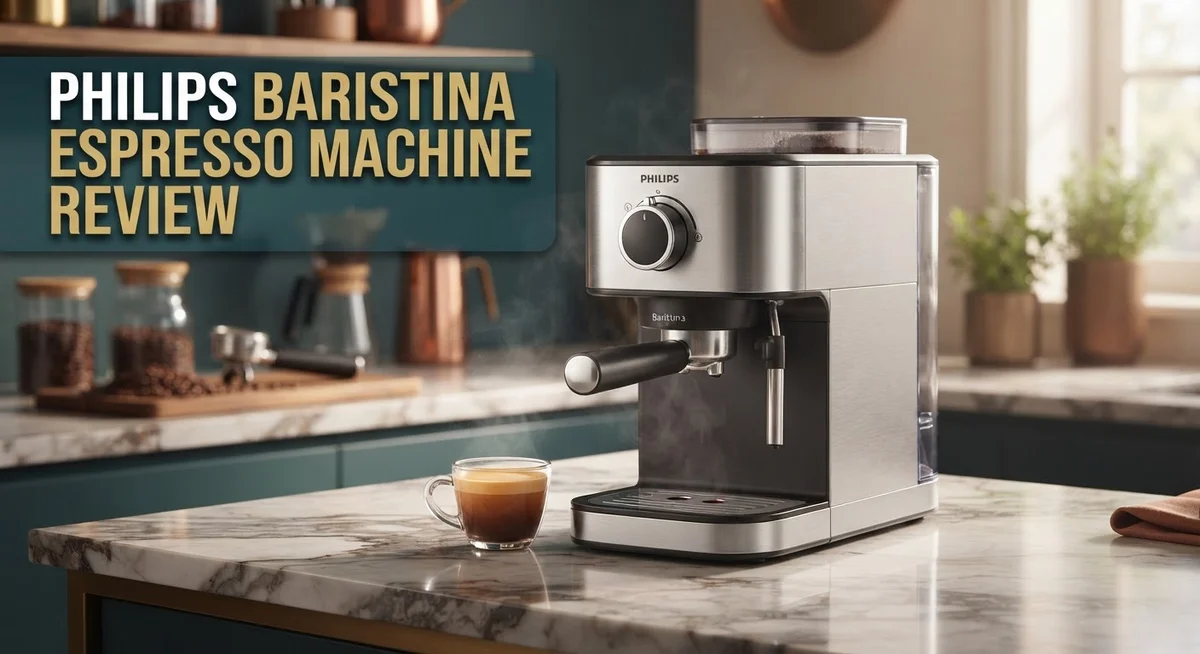
The Philips Baristina uses a hybrid design that blends portafilter aesthetics with fully automatic functionality. This approach creates a machine that looks traditional but operates like a modern bean-to-cup system. The exterior features a sleek black finish with stainless steel accents that complement most kitchen counters.
The body construction relies heavily on plastic components. The water tank, bean hopper, and outer casing all use plastic materials. This design choice keeps the machine lightweight and compact, measuring just 38cm deep and 18cm wide. However, the plastic build means the machine feels less sturdy than competitors with metal frames.
The integrated grinder sits at the top of the unit. It holds 170g of beans and connects directly to the brewing system. The compact layout means everything fits into a footprint smaller than many traditional espresso machines. This makes the Baristina ideal for kitchens with limited counter space.
The milk frother integrates into the side of the machine. You can steam milk and brew espresso without removing components or adjusting settings between tasks. The frother nozzle extends from the body and retracts when not in use. This design keeps the machine looking clean when idle.
The control panel sits on the front with large buttons for one touch operation. The interface is straightforward, which appeals to beginners. However, the hybrid design creates confusion for some users. The portafilter style basket and group head suggest manual control, but the machine operates fully automatically. This visual mismatch can mislead buyers about what they’re actually purchasing.
The water tank capacity reaches 1.2L, positioned at the back of the unit. The bean hopper sits directly above the grinder mechanism. Both components are easy to refill and access. The drip tray slides out for emptying used grounds and cleaning.
Overall, the Baristina prioritizes function and space efficiency over premium materials. The plastic construction keeps costs manageable but sacrifices the durability of metal-based machines. The design works well for apartment dwellers and kitchen spaces where every centimeter matters. The hybrid appearance may confuse expectations, so understanding what you’re buying beforehand matters greatly.
No products found.
Brewing Performance and Espresso Quality
The Baristina shines when it comes to speed. From the moment you press the button, beans drop into the grinder and water flows into your cup within seconds. This bean-to-cup operation keeps your morning routine fast and simple.
The 16 bar pressure system sits at the heart of extraction. This pressure level matches what many manual espresso machines deliver. However, the real question is consistency. Some users report pulling shots that taste crisp and balanced. Others find their espresso comes out sour or weak, even when using the same beans and settings.
The fully automatic grinder helps here. It grinds fresh beans right before brewing, which should improve flavor. The issue arises because you cannot adjust grind size or tamping pressure manually. The machine handles these steps for you, which removes control but also removes room for user error.
Water temperature matters for espresso quality. The Baristina reaches brewing temperature quickly thanks to its 1550W heating element. This speed is great for convenience, but some users notice temperature fluctuations between shots. A few espresso enthusiasts mention the machine pulls shots that taste thin or lack body.
The integrated milk frother adds versatility to your drinks. You can steam milk for lattes and cappuccinos right after pulling your shot. The frother works reasonably well for beginners who want milk based drinks without buying separate equipment.
Extraction inconsistency appears to be the Baristina’s biggest weakness. Even with an automatic system, shot quality varies from one brew to the next. This happens because the machine lacks fine tuning options. You cannot dial in the grind, adjust water flow, or control tamping force.
For beginners seeking simplicity, the Baristina delivers solid results most of the time. For coffee lovers who want to dial in their perfect shot, this machine may frustrate you. The one touch convenience comes at the cost of precision and repeatability in your cup.
Ease of Use and Automation
The Philips Baristina makes espresso brewing remarkably simple. You press one button and the machine handles everything from grinding to extraction. This one-touch system removes guesswork and appeals to beginners who feel intimidated by manual machines.
The fully automatic grinder sits inside the unit. It grinds beans fresh for each shot. You don’t need to buy pre-ground coffee or fiddle with grind settings. The machine does this work for you in seconds.
Automation speeds up your morning routine. The bean-to-cup cycle completes in about 30 seconds. You can prepare multiple drinks back-to-back without long wait times. This makes the Baristina ideal for busy households.
The integrated milk frother adds another layer of convenience. You steam milk automatically for lattes and cappuccinos. No separate pitcher or manual technique required. The frother connects directly to the side of the machine.
The control panel features large buttons on the front. Labels are clear and easy to understand. Anyone in your household can operate this machine without reading the manual multiple times. The design prioritizes accessibility over complexity.
One drawback emerges during maintenance. Descaling the machine takes approximately 44 minutes. This isn’t a quick five-minute task. You’ll need to set aside time for this cleaning cycle to keep the machine functioning properly.
The hybrid design creates some confusion. The machine looks like a traditional portafilter espresso maker from the outside. However, it operates as a fully automatic unit inside. New users sometimes expect manual control that doesn’t exist. Understanding this upfront prevents disappointment.
The learning curve stays minimal. Most people figure out the Baristina within their first use. The machine communicates through simple lights and sounds. You receive feedback about water levels and brewing status.
The 1.2L water tank requires frequent refilling if you make multiple drinks daily. Smaller households won’t notice this limitation. Larger families might find themselves refilling more often than expected.
Overall, the Baristina excels at removing barriers to espresso making. Automation handles the technical aspects. You simply insert beans, add water, and press the button. This approach makes home espresso accessible to everyone, regardless of experience level.
Top 3 Alternatives
Gaggia Classic Pro

- Solid Steel Housing, Made in Italy
- 9 Bar Espresso Extractions

Last update on 2026-10-23 / Affiliate links / Images from Amazon Product Advertising API
The Gaggia Classic Pro gives you real espresso-making control. This machine heats water quickly and lets you steam milk by hand. You get a commercial-style portafilter, which means you can use any coffee grounds you want. The build quality feels solid, and many users love how compact it sits on counters.
You’ll need to learn the basics of pulling shots and steaming milk yourself. This hands-on approach appeals to people who want to master espresso skills. The machine produces genuine crema and thick shots. Cleaning takes a few minutes, but the straightforward design makes maintenance simple.
Breville Barista Express

- MANUAL HAND-TEXTURED MICROFOAM: The powerful steam wand on this cappuccino maker and latte machine is designed to...
- PRECISE DOSE GRINDING: Integrated precision conical burr grinder on bean-to-cup espresso machine grinds on demand to...
Last update on 2026-10-23 / Affiliate links / Images from Amazon Product Advertising API
Breville’s Barista Express combines grinding and brewing in one unit. The built-in grinder means you grind beans right before extraction. This freshness makes a real difference in your cup’s flavor and aroma.
The machine features a digital temperature control that keeps water heat consistent. You still steam milk manually, which gives you flexibility. The portafilter accepts standard espresso baskets. Many people appreciate the intuitive buttons and clear display. Cleanup happens fast because the group head purges automatically between shots.
DeLonghi Dedica Espresso
No products found.
The DeLonghi Dedica brings automatic convenience to home espresso. This compact machine fits small kitchens perfectly. It automates the brewing process, so you get consistent shots without guesswork.
The Dedica includes a milk frother that creates microfoam for lattes and cappuccinos. Water temperature stays stable thanks to the thermoblock system. The machine reaches brewing temperature quickly, so you spend less time waiting. Preset buttons let you program your favorite drink sizes. Descaling reminders keep your machine running smoothly for years.
Capacity, Tank Size, and Grinder
The Philips Baristina comes with a 170g bean hopper that sits conveniently at the top of the machine. This capacity works well for daily use. You can store enough beans for several brewing sessions without constant refilling.
The water tank holds 1.2L and positions itself at the back of the unit. This size handles a few cups before you need to refill. If you make multiple drinks throughout the morning, you’ll notice the tank empties faster than expected. The placement makes refilling straightforward and doesn’t interrupt your workflow.
The integrated grinder is one of the Baristina’s standout features. It grinds beans automatically right before brewing. This bean-to-cup operation happens quickly. You simply add beans to the hopper and let the machine handle the rest. The grinder sits inside the unit, keeping your counter space clean and organized.
One key consideration: the grinder’s performance directly affects your espresso quality. The fully automatic grinding helps beginners avoid common mistakes. However, some users report that extraction inconsistency stems partly from grinder settings. You have limited control over grind size adjustments compared to manual espresso machines.
The compact design means all components fit into a relatively small footprint. The dimensions measure 38cm deep, 18cm wide, and 34.5cm tall. This makes the Baristina suitable for kitchens with limited counter space. The seamless integration of the grinder, water tank, and milk frother creates a cohesive look.
Storage capacity matters for your routine. The 170g bean hopper requires refilling every few days if you brew daily. The 1.2L water tank means you’ll refill it multiple times when making several drinks. Neither capacity feels restrictive for single users or couples. Larger households or offices might find themselves refilling more frequently.
Overall, the tank and grinder setup prioritizes convenience and simplicity over maximum capacity. The fully automatic grinder removes guesswork from the brewing process. The water tank size balances portability with practical daily use.
Maintenance and Descaling
Maintaining the Philips Baristina keeps your machine running smoothly for years. The descaling process is straightforward but does require your time and attention.
Descaling takes approximately 44 minutes from start to finish. This is longer than some competitors, so plan accordingly. You’ll need a descaling solution designed for espresso machines. Philips sells their own brand, but universal descaling products work too.
The process begins by filling the water tank with descaling liquid mixed according to the package instructions. Run the solution through the group head and steam wand. Let it sit for a few minutes between cycles. This breaks down mineral buildup inside the heating system and pipes.
Rinse thoroughly after descaling. Fill the tank with fresh water and run it through completely. Repeat this step at least twice. Mineral residue left behind affects your espresso flavor and machine performance.
How often should you descale? Hard water requires descaling every 2 to 3 weeks. Soft water allows you to wait 4 to 6 weeks. Your local water quality matters more than you might think. If you notice slower brewing or weaker pressure, descaling is probably overdue.
Daily cleaning prevents major maintenance headaches. Remove the portafilter after each use and rinse it under hot water. Wipe the group head with a damp cloth. Empty the used grounds container regularly.
The milk frother needs special attention. Milk residue builds up quickly inside the steam wand. Clean it immediately after frothing. Run steam through the wand for a few seconds, then wipe with a damp cloth. This prevents milk from hardening inside.
The water tank should be cleaned weekly. Remove it from the machine and rinse thoroughly. Check for any algae or mineral deposits. A clean tank means better water quality for your espresso.
The bean hopper occasionally needs attention too. Oils from coffee beans can accumulate over time. Wipe the interior with a dry cloth every few weeks. This keeps your grinder functioning properly and prevents rancid flavors.
Regular maintenance extends your machine’s lifespan significantly. Small daily habits prevent expensive repairs later.
Pros and Cons
Pros
- One touch brewing makes espresso accessible even if you’ve never used a machine before
- Compact design fits easily on countertops without taking up much space
- Integrated milk frother lets you create cappuccinos and lattes without extra equipment
- Bean to cup operation happens fast, so your morning coffee is ready quickly
- Fully automatic grinder eliminates the need for a separate grinder purchase
Cons
- Plastic construction feels less durable than metal alternatives on competing machines
- Extraction quality varies, and some users report sour or inconsistent shots
- Descaling requires approximately 44 minutes, which is longer than many other models
- Hybrid design confuses expectations since it looks like a manual portafilter machine but operates fully automatically
Who Should Buy It
The Philips Baristina works best for people who prioritize speed and simplicity over espresso perfection. If you wake up rushed and need coffee in minutes, this machine delivers. One touch brewing means you skip the learning curve that intimidates many new espresso drinkers.
Home baristas just starting out find the Baristina appealing. You don’t need grinder knowledge or portafilter technique. The fully automatic system handles everything from grinding to extraction. Beginners appreciate this hands off approach.
Apartment dwellers and small kitchen owners benefit from the compact footprint. This machine occupies minimal counter space compared to traditional espresso setups. You get a grinder and frother without cluttering your kitchen.
People who drink milk based drinks regularly should consider this option. The integrated frother makes cappuccinos and lattes straightforward. You avoid buying separate milk steamers or frothing pitchers.
Daily coffee drinkers who value convenience fit the target audience perfectly. The 170g bean hopper and 1.2L water tank support regular use without constant refilling. You can brew multiple cups before restocking supplies.
However, espresso enthusiasts seeking exceptional shot quality should look elsewhere. The Baristina’s extraction consistency varies, and some users report sour or unbalanced flavors. If you care deeply about crema, body, and taste complexity, this machine may disappoint.
People with hard water need to commit to frequent maintenance. Descaling takes approximately 44 minutes, which demands patience and planning. Soft water users face less hassle with descaling schedules.
Skip this machine if you prefer metal construction over plastic. The build quality emphasizes function over durability. Competitors offer sturdier materials that feel more premium.
The Baristina suits households with mixed coffee preferences. Some family members want quick lattes while others prefer simple espresso shots. This machine accommodates both needs without requiring multiple appliances.
Ultimately, the Philips Baristina targets people who value convenience and accessibility above all else. You’re willing to accept moderate espresso quality in exchange for speed and ease of use. This machine transforms your morning routine into a simple, stress free process.
Final Verdict
The Philips Baristina earns its place as a solid pick for casual coffee drinkers. It brings simplicity to your morning routine without fuss.
This machine shines brightest for beginners. If you want fresh coffee fast, the Baristina delivers on that promise every single time.
The learning curve stays minimal. You press a button, and your drink appears. No skills or training needed here.
That said, this machine has clear limits. Serious coffee lovers who chase perfect crema and rich flavor notes might feel let down.
The hybrid design creates confusion for many buyers. It looks like a portafilter machine but works as a fully automatic one. This mismatch sets wrong expectations from the start.
Think about your coffee goals before buying. Do you want quick convenience or deep flavor control?
If convenience wins, the Baristina fits your needs well. If flavor control matters more, look at other options on the market.
Compare this machine against rivals like the Breville Bambino or Neretva models. Each brand offers different strengths and weaknesses worth exploring.
The Breville Bambino often impresses users who want more consistent shots. The Neretva model appeals to those seeking extra bar pressure options.
Your final choice depends on personal priorities. Weigh speed against quality, and simplicity against control.
Small kitchens and busy mornings favor this machine. Its compact size and quick brewing cycle solve real everyday problems.
However, plastic parts and shot inconsistency remain valid concerns. These issues matter most to detail focused coffee fans.
Overall, the Philips Baristina serves a specific type of buyer well. It won’t satisfy everyone, but it doesn’t try to either.
Know your priorities first. Then decide if this machine matches your daily coffee needs.
For most casual drinkers, this remains a reasonable choice. For serious enthusiasts, other machines may serve you better in the long run.
Frequently Asked Questions
Does the Philips Baristina produce quality espresso?
The Baristina delivers decent espresso for casual drinkers. However, extraction consistency varies, and some users report sour or thin shots. The machine uses 16 bars of pressure, which is adequate but not exceptional.
If you want café-quality espresso, this machine has limits. Espresso lovers seeking rich, balanced shots should explore other options like the Breville Bambino, which offers more control over the brewing process.
Can you froth milk with this machine?
Yes. The Baristina includes an integrated milk frother built into the system. You can create cappuccinos and lattes without buying separate equipment.
The frother works well for basic milk drinks. Results depend on your technique, so expect a learning curve. Practice helps you achieve better microfoam over time.
How long does descaling take?
Descaling requires approximately 44 minutes. This is longer than many competing models, so plan ahead if you have hard water.
Regular maintenance matters for this machine. Hard water users should descale more frequently to prevent mineral buildup and maintain performance.
Is the Baristina good for beginners?
Absolutely. The one-touch brewing system makes it beginner friendly. You press a button, and your drink appears within seconds.
The learning curve stays minimal. No grinding adjustments or tamping needed. This simplicity appeals to people starting their home coffee journey.
What’s the difference between the Baristina and the Breville Bambino?
The Bambino offers more manual control and consistent shot quality. The Baristina prioritizes speed and automation over precision.
Choose the Baristina if convenience matters most. Pick the Bambino if you want to develop barista skills and achieve better espresso consistency.

Sanji brings years of expertise in kitchen equipment evaluation, combining practical testing with in-depth research to deliver reliable recommendations. His mission is to simplify kitchen shopping decisions through comprehensive reviews and expert comparisons.