Okura Cookware Review: Titanium Pan Worth the Hype?
Okura cookware shows up in almost every social media feed these days. The ads look stunning. A craftsman hammers a titanium pan. The surface shines. The promise sounds perfect. But does the pan match the marketing?
That is the real question. Many buyers ask if Okura is a smart purchase or an expensive letdown. This review answers that clearly. I studied real owner feedback, checked prices, and compared the pan with strong alternatives.
You get honest facts here, not hype. By the end, you will know if this pan belongs in your kitchen. Keep reading, because the truth about Okura might surprise you.
In a Nutshell: Quick Okura Cookware Summary
Short on time? This section gives you the fast facts. Read these points before you spend a single dollar.
- Okura sells hand hammered titanium style frying pans that claim a natural nonstick surface with no chemical coating. The look is beautiful and the marketing is strong.
- The price sits around $99.95 for one pan on the official site. Sets cost much more. Many shoppers feel this price is high for what they receive.
- Real owner reviews are mixed. Some love the even heating and easy cleanup. Others report sticky surfaces, stuck eggs, and flat food messes during first use.
- The pan needs oil or fat to work well. Reviewers say food sticks without it, which weakens the “natural nonstick” claim many people expect.
- Customer service draws frequent complaints. Buyers mention slow refunds, confusing shipping, and difficult return steps in several public reviews.
- Strong alternatives exist at similar or better value. Brands like Our Place and Plateful offer titanium pans with clearer track records and easy Amazon returns.
What Is Okura Cookware?
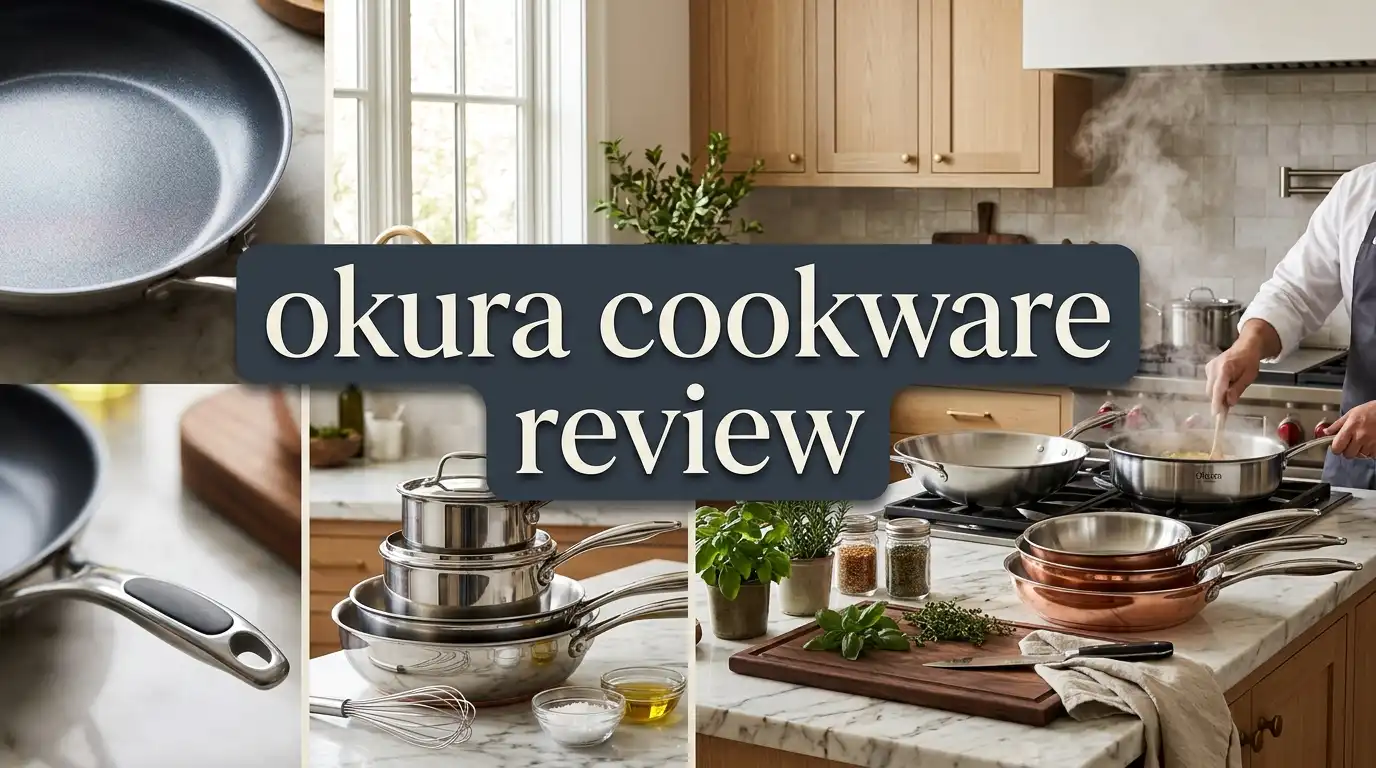
Okura is a cookware brand that sells titanium style frying pans and Japanese style knives. The brand markets a hand hammered pan surface. The ads suggest old world craftsmanship. A skilled worker shapes each pan by hand. That is the story the company tells.
The core product is a hammered titanium frying pan. It comes in sizes like 10.2 inch, 11 inch, and 11.8 inch. The brand also sells a wok with a flat base. You can buy single pans or full sets.
Okura says its pans are PFAS free and PFOA free. This means no harmful chemical coatings. Health focused cooks like this claim. Many people want to move away from Teflon style pans. Okura targets exactly those buyers.
The brand ships worldwide. It sells through its own website and through some marketplaces. The pricing sits in the premium range. A single pan costs close to $100. That price signals a high end product to most shoppers.
The marketing leans hard on Japanese design and artisan value. But the story and the product do not always match, as later sections show. Still, the brand attracts thousands of curious buyers each month. The look alone pulls people in.

- NO-COATING NONSTICK: A patented No-Coating titanium interior delivers effortless release without traditional coatings...
- PRO-GRADE TRI-PLY CONSTRUCTION: Stainless steel, aluminum, and titanium come together to form virtually indestructible...
Last update on 2026-10-23 / Affiliate links / Images from Amazon Product Advertising API
Okura Cookware Key Features and Specifications
Let me break down what Okura actually offers. These specs help you compare it with other pans. Facts matter more than ad copy here.
The pan uses a titanium cooking surface. Under that surface sits steel with an aluminum core. This mix helps spread heat. Titanium is lighter than steel, so the pan feels easy to lift. That is a real plus for many home cooks.
The surface has a hammered texture. This look is the brand signature. It also aims to reduce sticking. Okura claims no seasoning is needed, unlike cast iron or carbon steel pans.
Here are the main specs at a glance:
- Material: Titanium surface over steel and aluminum core for heat spread.
- Coating: No chemical coating. PFAS free and PFOA free by brand claim.
- Compatibility: Works on induction, gas, electric, and oven safe use.
- Sizes: 10.2 inch, 11 inch, and 11.8 inch pans plus a flat base wok.
- Care: Hand wash only for best life span.
The pan is oven safe, which adds flexibility. You can start on the stove and finish in the oven. The handle on some models needs assembly, which surprised several buyers. This is worth noting before you order.
How Does Okura Cookware Perform in Real Cooking?
Performance is where opinions split hard. Some cooks praise the pan. Others feel cheated. I looked at many first hand accounts to give you a balanced view.
On the positive side, several owners report even heating. The pan warms fast and sears well. One reviewer loved cooking rainbow trout in it. The food browned nicely and the pan handled heat with control.
Cleanup earns praise too. Fans say food lifts off with a quick wipe when they use oil. The titanium surface resists staining for these happy users. They call it a joy to maintain.
But the negative reports are loud and frequent. Many buyers say eggs stick badly on first use. One person described hash browns turning into an impossible mess. Another said the sides stick like cement. These stories repeat across review sites.
The common fix is simple. Use more oil or fat. Heat the pan slowly. But this raises a fair point. Any pan feels nonstick with enough oil. So the natural nonstick promise looks weak to disappointed users.
The truth sits in the middle. The pan can cook well with the right technique. It is not the effortless nonstick tool the ads suggest. Your results depend on heat control and oil use. Manage your expectations and you may enjoy it. Expect magic and you may feel let down.
Top 3 Alternatives for Okura Cookware
If Okura raises doubts, you have better options. These three titanium pans sell on Amazon with clear reviews and easy returns. Each one gives strong value. Compare them before you commit.
- NO-COATING NONSTICK: A patented No-Coating titanium interior delivers effortless release without traditional coatings...
- PRO-GRADE TRI-PLY CONSTRUCTION: Stainless steel, aluminum, and titanium come together to form virtually indestructible...
Last update on 2026-10-23 / Affiliate links / Images from Amazon Product Advertising API
The Our Place Titanium Always Pan Pro is a top pick. It uses a titanium surface over steel with an aluminum core. Owners call it a heavy, sturdy daily driver. It feels premium and browns food well. Many cooks convince their friends to buy one.

- PURE TITANIUM SURFACE: Crafted with SGS-certified titanium, this titanium frying pan delivers naturally smooth cooking...
- EXTREME HEAT RESILIENCE: Built to handle high-heat searing and oven use up to 750°F, this titanium hammered pan pro...
Last update on 2026-10-23 / Affiliate links / Images from Amazon Product Advertising API
The Plateful Titanium Pan is another solid choice. It uses SGS certified titanium with no coating. The brand says it resists scratching, warping, and chemical breakdown. It includes a lid and handles high heat up to 750F. This pan suits health focused cooks who want proof of quality.

- REVOLUTIONARY NO-COAT TECHNOLOGY: Features a non-toxic, nonstick titanium interior that is coating-free and made without...
- COMPACT & EFFICIENT DESIGN: Ideal for smaller kitchens, single servings, or side dishes with a 1.48 qt capacity and...
Last update on 2026-10-23 / Affiliate links / Images from Amazon Product Advertising API
The Our Place Mini Titanium Always Pan Pro works great for small kitchens. It measures 8.5 inch and comes with a spatula. It is PFAS free and oven safe up to high heat. This size fits eggs, single servings, and small meals with ease. It offers the same trusted build in a compact form.
Is Okura Cookware Really Titanium?
This question comes up a lot. And it deserves a straight answer. Some buyers doubt the titanium claim, and their tests raise fair concerns.
One owner did a simple check. He held a magnet to the pan. The magnet stuck. Pure titanium is not magnetic. So a sticking magnet suggests the pan has steel in it, not solid titanium. He returned his pan over this test.
But here is the nuance. The pan likely has a titanium cooking surface over a steel and aluminum body. This is common in titanium style pans. Even premium brands like Our Place use this build. A steel base helps with induction cooking and magnet response.
So the pan is not solid titanium. It is a titanium topped pan. That is not unusual. Many titanium pans on the market work this way. The problem is how Okura frames it. The ads suggest a pure hand hammered titanium tool.
Experts also note something important. You cannot easily hammer pure titanium by hand into a frying pan shape. Titanium is very hard to work. This fact makes the artisan story hard to believe. The romantic ad image likely does not match the factory reality.
So is it titanium? Partly yes, on the surface. Fully solid titanium? Almost certainly not.
Okura Cookware Price and Value for Money
Price is a big sticking point for Okura. The brand charges premium money. Buyers must decide if the value fits the cost.
A single hammered pan costs about $99.95 on the official site. The wok runs around $119.95. A three piece set can climb past $260. These are serious prices for cookware. They place Okura in the high end tier.
Here is the concern. Several buyers found near identical pans on Alibaba for a small fraction of the cost. Some reported prices as low as $26 to $42. One person said their elderly mother spent over $400 on a set that sells cheap overseas.
This gap hurts the value case. If the same pan sells for $30 elsewhere, the $100 price feels inflated. You pay a lot for the brand story and marketing, not just the pan itself.
That said, buying from Alibaba brings its own risks. No easy returns. No support. Long shipping. So the low price comes with trade offs too.
For fair value, compare Okura with Amazon titanium pans. Brands like Plateful and Our Place sit in a similar or lower price range. They offer easy returns and clear reviews. Value is not just price. It is price plus trust plus support. On that full measure, Okura struggles to win.
Okura Cookware Pros and Cons
Every product has strong points and weak points. Here is the honest breakdown for Okura. Weigh both sides before you buy.
The pros give real reasons to consider it. The pan looks beautiful. The hammered surface stands out on any stove. It heats fast and evenly for many users. It is lighter than cast iron. It is PFAS free by brand claim. And it works on all stovetops including induction.
But the cons are serious and frequent. Read them carefully:
- Sticking problems appear in many first use reports, especially with eggs and starchy foods.
- High price compared with near identical pans sold cheaply on overseas sites.
- Weak customer service with slow refunds and confusing shipping in several accounts.
- Handle assembly required on some models, which feels cheap to buyers expecting a finished pan.
- Misleading marketing around the hand hammered artisan story and the pure titanium claim.
The pros are real but modest. The cons are the kind that cost you money and patience. This balance matters. A pretty pan means little if it sticks and support fails you. Judge with clear eyes.
Customer Reviews and Real User Feedback
Real feedback tells the true story. I gathered reports from many owners. The picture is mixed, and it leans cautious.
Some happy users exist. They report even heating and easy cleanup. One person said the 11 inch pan kept its nonstick feel and cleaned easily. Another loved searing fish in it. These fans feel the pan earned its price.
But the critical reviews dominate many threads. A large share of reviews sit at one star on trusted review sites, near 28 percent by one owner count. That is a high rate of unhappy buyers. It signals a real quality gap for many people.
Common complaints repeat often. Food sticks on first use. The pan surface is not flat for some. Returns are hard. One buyer said returns must ship back overseas at buyer cost. Another paid for a pan he never received after a shipping mess.
Customer service draws heavy fire. Several people used credit card disputes to get refunds. One noted that a major card issuer refunded him the same day. These stories point to a pattern, not just bad luck.
The lesson is clear. Read reviews before you buy. Do not trust the ad alone. The real user experience varies widely. Some win. Many feel burned. Go in informed.
Who Should Buy Okura Cookware?
Okura is not right for everyone. But it may suit certain cooks. Let me help you decide if you fit that group.
You might like Okura if you value looks and light weight. The hammered surface is genuinely attractive. If a pretty pan brings you joy, this one delivers on style. It also suits cooks who always use oil and manage heat carefully.
You should also be comfortable with technique. This pan rewards slow heating and proper fat use. If you enjoy learning a pan and adjusting your method, you may bond with it over time.
But skip Okura if you want true effortless nonstick. If you crave eggs sliding off a dry pan, look elsewhere. This pan will frustrate you. It needs oil to shine, and even then results vary.
Avoid it too if you dislike return hassles. The customer service reports are worrying. If a smooth refund path matters to you, buy from a seller with easy returns instead. Amazon options serve you better here.
Budget shoppers should also pause. The price feels high next to cheaper twins online and trusted rivals on Amazon. If value drives your choice, other pans give more for your money. Match the pan to your needs, not to the ad.
How to Use and Care for Your Okura Pan
If you own an Okura pan, good care helps a lot. The right steps reduce sticking and extend the pan life. Follow these tips closely.
Start with slow heat. Warm the pan on low to medium first. Give it time to spread heat evenly. Rushing to high heat causes hot spots. Those spots make food stick and burn. Patience here saves your meal.
Always add oil or fat before you cook. Wait until the pan is warm, then add the oil. Let the oil heat for a moment. This step is not optional with this pan. It is the key to a nonstick result.
Avoid cooking sticky foods dry. Eggs and starchy foods need enough fat. Use a bit more than you think. This simple habit prevents the messes many owners report.
Clean the pan by hand. Skip the dishwasher to protect the surface. Use warm water, mild soap, and a soft sponge. Avoid harsh scrubbers that scratch the finish. Dry the pan fully after each wash.
Store the pan with care. Do not stack heavy items on it. Use a pan protector or cloth if you stack cookware. Good storage keeps the surface smooth. Treat the pan well and it will cook better and last longer.
Okura vs Our Place Titanium Pan: Which Wins?
Many buyers compare Okura with the Our Place Titanium Always Pan Pro. Both use titanium surfaces. Both target health focused cooks. But they differ in key ways.
The Our Place pan is much heavier. It weighs around 4.5 pounds for the large size. Okura weighs about 2.1 pounds. The heavier build feels more solid to many cooks. Weight often signals a sturdier pan in this category.
Build quality favors Our Place too. It uses a titanium surface over steel with an aluminum core. Owners call it a reliable daily driver. Many convince friends to buy one. That word of mouth signals real satisfaction.
Okura wins on weight for those who want a light pan. It is easier to lift and swirl. That helps cooks with wrist strain. The hammered look also stands out more than the smooth Our Place finish.
But trust tips the scale to Our Place. It sells on Amazon with clear reviews and easy returns. Okura carries service complaints and refund struggles. Peace of mind matters when you spend $100 on a pan.
My verdict? Our Place wins for most buyers. It offers proven quality, easy returns, and strong support. Choose Okura only if light weight and looks top your list. For value and trust, Our Place leads.
Is Okura Cookware a Scam or Legit?
This is the biggest question people ask. And it deserves a fair, careful answer. The truth is not simple.
Okura is a real company that ships real pans. So it is not a pure fake in that sense. People do receive products. Some even like them. That fact matters.
But strong concerns cloud its reputation. Some researchers claim the ad copy and founder images are AI generated. They say the brand picks products from overseas suppliers and rebrands them at high prices. These claims come from public discussion, not proven court findings.
The artisan story raises real doubts. Experts note you cannot easily hand hammer pure titanium. So the craftsman ad likely stretches the truth. The “Japanese style” knife label also hints the brand is not truly Japanese made.
Service complaints add to the worry. Buyers report hard returns, overseas shipping for refunds, and slow support. Several needed credit card disputes to get their money back. That pattern hurts trust.
So is it a scam? Not in the strict sense, since you get a pan. But the marketing appears misleading, and the value looks poor next to cheaper twins. I would call it overpriced with heavy marketing, not an outright fraud. Buy with caution, or choose a trusted rival instead.
Final Verdict on Okura Cookware
Time for the bottom line. You read the facts. Now here is my clear judgment on Okura cookware.
The pan has real strengths. It looks stunning. It heats fast. It weighs little. And it skips chemical coatings. For some cooks, that mix brings joy. Those users cook with oil and manage heat well.
But the weaknesses run deep. Many buyers report sticking, stiff returns, and poor support. The price feels high next to near identical pans online. The marketing appears to stretch the truth about craftsmanship and titanium.
My honest take is simple. Okura is a decent pan wrapped in oversized hype. It is not the artisan treasure the ads promise. It is a titanium topped pan sold at a premium price with mixed results.
If the look wins your heart and you accept the risks, you may enjoy it. But most buyers get more value elsewhere. Amazon titanium pans from Our Place and Plateful offer clearer quality and easy returns.
So my advice? Think twice before you buy Okura at full price. Compare it with trusted rivals first. Let your needs and budget guide you, not the shiny ad. A smart choice today saves you money and stress tomorrow.
Frequently Asked Questions
Is Okura cookware made of real titanium?
The pan has a titanium cooking surface over steel and an aluminum core. It is not solid titanium. A magnet sticks to it, which confirms steel inside. This build is common for titanium style pans, but the ads suggest pure titanium.
Why does food stick to my Okura pan?
Food sticks when the pan is dry or heats too fast. Warm the pan slowly and always add oil or fat. Most owners find the pan works only with enough oil. The natural nonstick claim is weaker than the ads suggest.
How much does an Okura pan cost?
A single pan costs around $99.95 on the official site. The wok runs about $119.95. Sets can climb past $260. Many buyers found near identical pans overseas for far less, which makes the price feel high.
Is Okura cookware a legit company?
Okura is a real company that ships real pans. But it faces claims of misleading ads, rebranded overseas products, and weak service. It is not a strict scam, yet the marketing appears to stretch the truth about its craftsmanship.
Can I return an Okura pan easily?
Returns draw many complaints. Some buyers report overseas shipping costs and slow refunds. Several used credit card disputes to get their money back. Easy returns are not a strength of this brand.
What are the best alternatives to Okura cookware?
Strong options include the Our Place Titanium Always Pan Pro, the Plateful Titanium Pan, and the Our Place Mini Titanium Always Pan Pro. These sell on Amazon with clear reviews, trusted quality, and easy returns.
Is Okura cookware safe to use?
The brand says its pans are PFAS free and PFOA free, with no chemical coating. This appeals to health focused cooks. If the claim holds true, the pan avoids common nonstick chemicals found in older Teflon style pans.

Sanji brings years of expertise in kitchen equipment evaluation, combining practical testing with in-depth research to deliver reliable recommendations. His mission is to simplify kitchen shopping decisions through comprehensive reviews and expert comparisons.