PHILIPS 5500 Series Fully Automatic Espresso Machine Review
Your morning coffee habit costs more than you think. A daily latte from the corner shop drains roughly $150 a month from your wallet, and you still have to stand in line for it.
The PHILIPS 5500 Series promises to end that routine. It grinds, tamps, brews, and froths milk at the touch of one button, then hands you a cappuccino in under a minute.
But this machine carries a $1,299 list price. That is real money, and you deserve to know exactly what you get for it before you commit.
I dug through owner feedback, hands on tester reports, and the full spec sheet from Philips. This review covers the good, the annoying, and the details most product pages skip.
By the end, you will know whether the 5500 belongs on your counter or whether a different machine suits you better. Let us get into it.
In a Nutshell: The PHILIPS 5500 Series at a Glance
Short on time? These six points cover everything that matters most.
- It makes 20 hot and iced drinks with one button press. The lineup includes espresso, ristretto, cappuccino, latte macchiato, flat white, cafe au lait, americano, iced latte, iced cappuccino, iced americano, milk foam, and hot water for tea. Every recipe stores your preferred strength, volume, and temperature.
- The LatteGo milk system is the star feature. It uses only two parts, no tubes, and no hidden channels. You rinse it under the tap in about 15 seconds or drop it in the dishwasher. Mold and sour milk smells stop being a worry.
- SilentBrew technology cuts noise by 40% compared to the older 5400. Philips added sound insulation around the grinder and pump plus a tighter bean hopper seal. Early risers can brew without waking the whole house.
- A 100% ceramic grinder handles the beans. Ceramic burrs run cooler than steel, which protects delicate flavor compounds, and they stay sharp far longer. You get 12 grind settings to dial in.
- Espresso quality is good, not world class. The brewing unit is shared with cheaper Philips models, so you will not get third wave cafe results. The Extra Shot button fixes most of that by adding depth and caffeine to any recipe.
- Value depends entirely on the price you pay. At full retail it faces stiff competition. During a sale it becomes one of the smartest buys in the category.
PHILIPS 5500 Series Fully Automatic Espresso Machine: Full Overview

- 20 PRESETS, ENDLESS COMBINATIONS: Hot drinks like espresso, coffee, lattes, and cappuccinos, to iced coffee, or simply...
- YOUR COFFEE IN ONE TOUCH, TAILORED TO YOU: Automatically grinds, tamps and brews at the push of a buttonon the intuitive...

Last update on 2026-09-12 / Affiliate links / Images from Amazon Product Advertising API
The 5500 sits near the top of the Philips lineup, just below the flagship 5600. It replaced the popular 5400 and brought three meaningful upgrades with it.
Those upgrades are SilentBrew sound reduction, the Extra Shot function, and a wider iced drink menu. Everything else follows the proven Philips formula.
The machine stands 14.6 inches tall, 9.6 inches wide, and 17 inches deep. That footprint slides under most standard kitchen cabinets, though you should measure first because you fill the bean hopper from the top.
A 15 bar pump drives extraction. The water tank holds 1.8 liters and pulls out from the side, so you never need to move the machine to refill it.
The bean hopper takes 275 grams of whole beans and seals tightly to keep them fresh. A separate bypass chute accepts pre ground coffee when you want decaf without emptying the hopper.
Philips rates the brew group for high volume use and backs the machine with a two year warranty. Owner ratings sit around 4.5 out of 5 across 400 plus reviews on the Philips site, with 87% recommending it.
The finish comes in black chrome with silver accents and metal detailing. It looks solid on a counter, though some testers find the button heavy front a little dated next to minimalist rivals.
What you are really buying here is consistency. Push a button, walk away, come back to a finished drink. That is the entire pitch, and the 5500 delivers on it reliably.
Design, Build Quality, and Kitchen Footprint
The body uses high grade plastic with metal accents, which is standard across the whole super automatic category. Plastic keeps weight down and costs reasonable, and the panels here fit together tightly with no creaks.
The drip tray slides in and out smoothly and includes a float indicator that rises when it needs emptying. Small touches like this save you from surprise spills.
Philips redesigned the bean hopper lid for this generation. The new seal locks in aroma and blocks grinder noise at the same time, which is clever engineering for one part.
The coffee spout adjusts up and down to fit anything from a tiny espresso glass to a tall travel mug. Taller cups up to about 5.5 inches clear without trouble.
Buttons sit along the front panel beside a 2.4 inch color display. Older users and guests figure it out quickly because each button does exactly one thing, with no swipe gestures to learn.
The brew group pops out from a side door for weekly rinsing. Philips includes animated guides on the display that walk you through removal and reinstallation step by step.
Weight comes in around 17 pounds, so the machine stays put during grinding. It never walks across the counter the way lighter models sometimes do.
Cable length runs about 3.3 feet, which is a bit short. Plan your outlet placement before you unbox, because you may need to shift the machine closer to power than you had hoped.
The LatteGo Milk System: Why It Changes Everything
Milk systems are where most espresso machines fail their owners. Tubes clog, valves trap residue, and within months your cappuccinos taste faintly of yesterday.
LatteGo solves this with radical simplicity. The entire system is two plastic pieces that snap together with no tubes, no needles, and no internal channels.
Air and milk mix in a cyclonic chamber at high speed. The spinning action creates froth as milk travels toward the spout, which is why the design needs so few parts.
Cleaning takes about 15 seconds under running water. You can also toss both pieces in the dishwasher, which almost no competing milk system allows.
The foam quality impresses most owners. It comes out thick, glossy, and stable enough to hold its shape in a cappuccino for several minutes.
Plant based milks work well here too. Oat milk froths particularly nicely, and almond and soy both produce usable texture, which matters if dairy is off your list.
There is one honest limitation. The foam leans airy with slightly larger bubbles, so flat white purists chasing dense microfoam will notice the difference.
For cappuccinos, lattes, and macchiatos the texture is genuinely excellent. Only the flat white suffers, and most home drinkers will never care about that distinction.
The milk container holds enough for two large milk drinks back to back. Pop the whole carafe in the fridge between uses and it stays fresh without any extra steps.
Top 3 Alternatives for the PHILIPS 5500 Series Espresso Machine
The 5500 is strong, but it is not the only option worth your money. These three machines cover the most common reasons a buyer might look elsewhere.

- With Philips 4300 Series easily make up to 8 black and milk-based aromatic coffee varieties with the touch of a button...
- LatteGo Milk System: Top your coffee off with a silky-smooth layer of milk froth
Last update on 2026-09-12 / Affiliate links / Images from Amazon Product Advertising API

- #1 Worldwide Espresso Machine Maker* *Independent Research Institute, Sales Leader, Full Year 2025
- 7 ONE-TOUCH RECIPES: 7 one-touch or customized coffee drinks: espresso, cappuccino, latte macchiato, iced coffee...
Last update on 2026-09-12 / Affiliate links / Images from Amazon Product Advertising API

- The Gaggia Magenta Prestige is a sleek and modern machine that offers 12 customizable drink selections
- On the Fly Programming: Making changes to your favorite drinks has never been easier. Any time you brew a drink you have...
Last update on 2026-09-12 / Affiliate links / Images from Amazon Product Advertising API
The Philips 4300 Series is the smart pick for buyers who want LatteGo convenience at a much lower price. It makes eight drink varieties instead of 20 and skips the Extra Shot button, but it uses the same ceramic grinder and the same identical milk system. If your household drinks espresso, coffee, cappuccino, and latte macchiato and nothing more exotic, you can save several hundred dollars here.
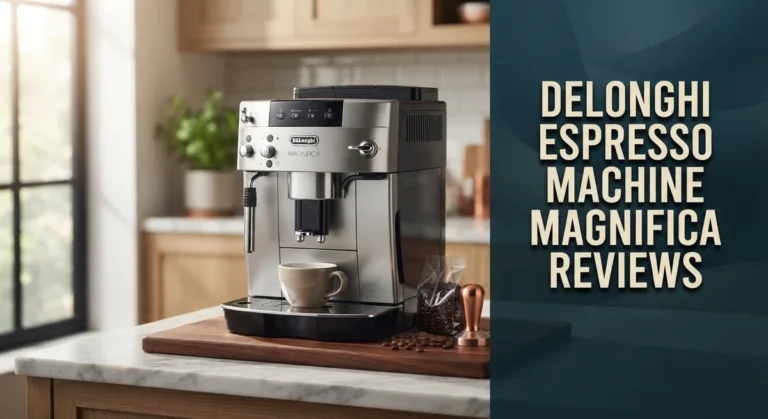
The De’Longhi Magnifica Evo appeals to people who care most about espresso flavor and want a hands on option for milk. Its conical burr grinder and 13 grind settings produce a punchier shot than Philips manages, and the manual steam wand lets you texture milk yourself for real latte art. The tradeoff is more work and fewer automatic recipes, so this one rewards buyers who enjoy the process.
The Gaggia Magenta Prestige brings Italian build quality and a 12 drink menu with a one touch milk carafe. Gaggia uses a stainless steel front panel and a genuinely commercial feel, and the machine handles darker roasts beautifully. Owners praise the espresso body, though the milk carafe takes noticeably longer to clean than LatteGo does.
The 100% Ceramic Grinder and Grind Settings
Most super automatics under $1,500 use stainless steel burrs. Philips went with ceramic, and that choice brings two real advantages.
Ceramic conducts heat poorly, which sounds bad but is actually the point. Less heat transfer means less flavor damage during grinding, so the aromatic oils in your beans survive to reach the cup.
Ceramic also resists wear far better than steel. Philips rates these burrs for roughly 20,000 cups, which works out to well over a decade of normal household use.
You get 12 grind settings adjusted by a dial inside the bean hopper. Setting one produces fine espresso grounds and setting 12 produces coarse grounds for longer drinks.
Testers report the second or third finest setting works best for medium roast beans. Darker roasts grind more easily and usually want one or two steps coarser.
Two rules protect the grinder. Always adjust the dial while the grinder is actually running, and never move more than one step at a time. Ignoring this can crack a burr.
The grinder doses between roughly 8 and 12 grams per shot depending on your strength setting. At maximum strength with an Extra Shot you will use 20 to 22 grams per drink.
That dose is generous compared to some rivals that cap out near 15 grams. You get stronger coffee, though your bean budget climbs accordingly.
Espresso Quality: How Does the Coffee Actually Taste?
Here is the part where I have to be straight with you. The 5500 makes good coffee, reliably, but it does not make spectacular coffee.
The brewing unit inside is the same one Philips uses in the 3300 and 4300. That hardware produces a clean shot with decent body and a respectable crema layer.
What you will not get is the layered complexity a skilled barista pulls from a quality single origin. The extraction is competent rather than exceptional.
There is an important catch that catches many new owners off guard. The machine needs 20 to 30 brew cycles before the coffee tastes right.
Early shots run thin and sometimes taste slightly plasticky as the new components season. Philips does not explain this clearly anywhere, and it causes a lot of unnecessary returns.
Buy a cheap bag of beans and run through it quickly. By the time that bag empties, your machine will taste noticeably better.
The Extra Shot button is the genuine hero feature. Testers consistently found that every drink improved with an extra shot added, gaining richness and depth that plain settings could not reach.
Maximum temperature plus a fine grind plus a one ounce volume gives the best espresso results. Dial those three in and the 5500 competes well with anything near its price.
Bean choice matters enormously here. A fresh medium roast from a local roaster will outperform a supermarket bag by a wide margin in this machine.
SilentBrew Technology: A Genuinely Quiet Machine
Espresso machine noise is underrated as a buying factor until you live with a loud one. Grinding at 6 a.m. in an apartment can genuinely strain relationships.
Philips claims SilentBrew makes the 5500 40% quieter than the 5400 it replaced. That number holds up in real world listening.
Three changes create the reduction. Extra insulation surrounds the grinder housing, the pump sits on dampening mounts, and the new hopper lid seals tightly enough to contain sound.
The grinder produces a muffled low whir instead of the harsh rattle older models made. It sounds closer to a coffee mill in another room than a machine on your counter.
The pump remains audible but stays low and steady. Nobody sleeping behind a closed door will wake up because of it.
Owner reviews mention this feature more than almost any other. People who upgraded from older bean to cup machines describe the difference as dramatic.
The milk frothing cycle is the loudest phase, and even that stays reasonable. Cyclonic frothing produces a brief hiss rather than the loud screech of a steam wand.
If you share a home with light sleepers, shift workers, or a napping baby, this feature alone may justify choosing the 5500 over a noisier rival.
Touch Display, User Profiles, and Daily Operation
The 2.4 inch color display sits beside physical buttons rather than replacing them. Philips decided buttons beat touchscreens for everyday speed, and they made the right call.
Seven drinks get their own dedicated quick access button. The remaining recipes live one press deeper under a More Drinks menu.
Adjusting a drink takes seconds. Icons on screen let you change strength, volume, temperature, and milk quantity, then save the result to a profile.
The machine supports four named user profiles plus a guest setting. Each profile remembers every customization across all 20 recipes.
That matters in a busy household. Your partner can take a weak large latte while you take a double strength ristretto, and neither of you has to reprogram anything.
The next model down, the 4400, offers only two profiles. For families of three or more coffee drinkers, the jump to four is a real reason to choose the 5500.
QuickStart gets the machine ready in roughly 20 to 30 seconds from cold. It heats only as much as your selected recipe requires, which saves both time and electricity.
Maintenance prompts appear as animated guides on the display. Instead of hunting through a manual, you watch a short animation showing exactly which part to remove.
The interface is simple enough that a complete beginner makes a correct drink on the first try. That accessibility is the whole point of a machine like this.
Iced Coffee Performance and the Over Ice Menu
Iced coffee has overtaken hot coffee in many households, and Philips clearly noticed. The 5500 dedicates a full section of its menu to cold drinks.
The iced lineup includes iced espresso, iced americano, iced coffee, iced cafe crema, iced cafe latte, iced cappuccino, and iced cafe au lait. That is seven cold recipes, which beats most machines in this price bracket.
The method is smart. You fill your glass with a specified number of ice cubes, then the machine brews at a lower temperature and slightly smaller volume directly over them.
Lower brew temperature prevents the bitter, over extracted taste you get when hot espresso hits ice. The reduced volume stops the melting ice from watering everything down.
Results are genuinely good. Iced americanos come out crisp and clean, and iced lattes taste balanced rather than diluted.
For iced milk drinks, the machine still steams the milk warm to build texture before it meets the ice. This sounds counterintuitive but produces better mouthfeel than cold milk alone.
Follow the ice cube count the display recommends. Skip that guidance and your drink will land too warm or too weak.
Buyers who want more cold options must jump to machines costing twice as much. For the money, the 5500 handles iced coffee better than almost anything near it.
Cleaning, Maintenance, and Long Term Care
Cleaning is where the 5500 earns its reputation. The machine asks very little of you compared to most bean to cup rivals.
Daily tasks take about two minutes. Empty the puck container and drip tray, then rinse the two LatteGo pieces under the tap.
The machine also runs an automatic rinse cycle at startup and shutdown. That flushes the coffee circuit without any input from you.
Weekly, wash the milk carafe properly and pull the brew group out for a warm water rinse. Never use soap on the brew group, and let it air dry a couple of hours before reinstalling.
Every few months, vacuum coffee dust out of the grinder area and apply a small amount of food safe lubricant to the brew group spring. Philips provides a tube of grease in the box.
Total time investment runs around 20 minutes per week. That is less than most people spend cleaning a French press over the same period.
The drip tray, puck container, and LatteGo parts are all dishwasher safe. Load them on the top rack and forget about them.
Neglecting maintenance is the single biggest cause of failure in these machines. Stay on top of the simple weekly routine and the 5500 should serve you for many years.
AquaClean Filter, Water Hardness, and Descaling
Limescale kills espresso machines. Mineral deposits build up inside the boiler and water lines, restricting flow until the machine simply stops.
Philips fights this with the AquaClean filter system. Each filter drops in the water tank and reduces scale forming minerals as water passes through.
The claim is impressive. Eight filter replacements let you skip descaling for up to 5,000 cups, which for many households means years without a descale cycle.
Filters last roughly 60 days or 95 liters, whichever comes first. The display counts down and tells you when to swap.
Replacement filters cost around $15 to $20 each in two packs. Budget roughly $100 per year if you brew heavily, less if your use is moderate.
Set your water hardness during initial setup using the included test strip. The machine adjusts its descaling reminders based on that reading, so an accurate setting genuinely matters.
Filtered or bottled water works too and extends machine life further. Avoid distilled water, because the machine needs some mineral content to read water levels correctly.
When descaling does come due, the process takes about 30 minutes and uses Philips descaler solution. The display walks you through each step.
Skipping a descale prompt is a mistake. The machine will eventually lock out brewing until the cycle completes, which is Philips protecting you from yourself.
Pros and Cons of the PHILIPS 5500 Series
Every machine involves tradeoffs. Here is the honest balance sheet after weighing owner reports and hands on testing.
Pros
- LatteGo milk system uses only two parts and rinses clean in about 15 seconds, with dishwasher safe pieces
- 20 hot and iced drink recipes cover far more ground than typical machines at this price
- 100% ceramic grinder protects bean flavor and lasts roughly 20,000 cups before wear becomes an issue
- SilentBrew technology runs 40% quieter than the previous 5400 model, which suits apartments and early mornings
- Extra Shot button adds real depth to any drink and is unique to the 5500 in the Philips lineup
- Four user profiles plus a guest setting keep multiple coffee drinkers happy without reprogramming
- QuickStart delivers a ready machine in 20 to 30 seconds from a cold start
- AquaClean filters can postpone descaling for up to 5,000 cups
- Compact 9.6 inch width fits under most standard kitchen cabinets
- Excellent milk foam quality including strong results with oat and other plant based milks
- Animated display guides make setup and maintenance genuinely easy for beginners
- Two year warranty and strong Philips quality control
Cons
- Espresso quality trails similarly priced rivals because the brewing unit comes from cheaper models
- Needs 20 to 30 brew cycles before the coffee tastes properly good, which Philips never explains
- Milk foam runs airy, so true flat white texture stays out of reach
- Full $1,299 list price is high for the performance you receive
- Button heavy front panel looks dated beside minimalist competitors
- High dose at maximum strength uses 20 to 22 grams per drink, raising bean costs
- Only seven of 20 drinks get dedicated quick access buttons
- Short 3.3 foot power cable limits placement options
- Replacement AquaClean filters add ongoing expense
Who Should Buy the PHILIPS 5500 Series?
- 20 PRESETS, ENDLESS COMBINATIONS: Hot drinks like espresso, coffee, lattes, and cappuccinos, to iced coffee, or simply...
- YOUR COFFEE IN ONE TOUCH, TAILORED TO YOU: Automatically grinds, tamps and brews at the push of a buttonon the intuitive...
Last update on 2026-09-12 / Affiliate links / Images from Amazon Product Advertising API
This machine suits specific people very well and other people poorly. Knowing which group you fall into saves you both money and regret.
Buy it if convenience ranks above perfection. You want to press one button, get a good cappuccino, and rinse two plastic parts. That is exactly what the 5500 delivers, every single morning.
Buy it if you hate cleaning coffee equipment. No milk system on the market is easier to maintain, and that advantage compounds over years of ownership.
Buy it if iced coffee is your daily drink. Seven cold recipes at this price is genuinely hard to beat.
Buy it if several people share the machine. Four profiles plus a guest setting means nobody fights over settings.
Buy it if noise is a real concern. SilentBrew makes a measurable difference in shared homes and small apartments.
Skip it if espresso flavor is your top priority. Machines from De’Longhi and KitchenAid extract better shots for similar money, though usually with fewer drink options.
Skip it if you chase perfect microfoam and latte art. LatteGo is convenient rather than artistic, and a manual steam wand serves that goal far better.
Skip it if you want to pay full retail. The 5500 goes on sale constantly, and patience here can save you $300 or more.
Price, Value, and Final Verdict
The list price sits at $1,299.99. At that number, the 5500 is a harder sell because rivals deliver better coffee for the same outlay.
The reality is that it rarely stays at list price. Discounts appear regularly, especially around major sale events, and the machine frequently lands in the $700 to $900 range.
At $900 or below, the 5500 becomes an easy recommendation. You get 20 drinks, the best milk system in the business, a ceramic grinder, and a quiet machine for less than many eight drink competitors.
Run the numbers against your café habit. At roughly $5 per drink, two coffees a day costs you about $300 a month, meaning the machine pays for itself in three or four months.
Bean cost runs around $0.50 to $0.70 per drink using quality whole beans. Add milk and filters and your true per drink cost still lands near $1.
The machine’s weaknesses are honest but manageable. Season it properly with 30 cycles, use fresh beans, press Extra Shot, and set a fine grind with maximum temperature.
Do those four things and the coffee genuinely satisfies. Skip them and you will wonder what you paid for.
My verdict lands at a strong 8 out of 10. The PHILIPS 5500 Series is the best convenience focused espresso machine near its street price, and the LatteGo system alone makes it worth serious consideration.
Wait for a discount, season it patiently, and you will have a machine that quietly earns its counter space every morning for years.
Frequently Asked Questions
Is the PHILIPS 5500 Series worth the money?
At its $1,299 list price the value is debatable because rivals brew better espresso for similar cost. At a discounted price of $900 or less it becomes excellent value, because no competitor matches the combination of 20 drinks, the two part LatteGo milk system, a ceramic grinder, and quiet operation. Watch for sales, which happen often.
How many drinks can the PHILIPS 5500 make?
The machine offers 20 preset recipes covering espresso, ristretto, espresso lungo, cafe crema, coffee, americano, cappuccino, latte macchiato, flat white, cafe latte, cafe au lait, seven iced variations, travel mug, milk foam, and hot water for tea. Seven of these have dedicated buttons and the rest sit in the More Drinks menu. Every recipe accepts custom strength, volume, and temperature settings.
Why does my new Philips 5500 coffee taste bad?
New Philips machines need roughly 20 to 30 brew cycles before the internal components season properly. Early shots often taste thin or slightly off, which is completely normal and not a defect. Buy an inexpensive bag of beans, run through it quickly, and the flavor will improve noticeably.
Is the LatteGo system dishwasher safe?
Yes. Both LatteGo pieces go on the top rack of your dishwasher without any issue. Most owners simply rinse them under the tap, which takes about 15 seconds and works just as well.
Can the PHILIPS 5500 use plant based milk?
Yes, and it performs well. The cyclonic frothing system handles oat, soy, almond, and other alternatives, with oat milk producing the closest texture to dairy foam. Barista style plant milks froth best because of their added protein and fat content.
How often does the PHILIPS 5500 need descaling?
With AquaClean filters installed and replaced when prompted, you can go up to 5,000 cups or roughly eight filter changes before descaling becomes necessary. Without filters, expect a descale cycle every few months depending on your local water hardness. Set your water hardness correctly during setup so the reminders stay accurate.
What is the difference between the Philips 5500 and the 5400?
The 5500 adds SilentBrew technology for 40% quieter operation, the Extra Shot button for stronger drinks, an expanded iced coffee menu, and a redesigned bean hopper lid with a better seal. Both machines share the same LatteGo milk system and ceramic grinder. The 5500 is the clear upgrade if the price difference is modest.
Does the PHILIPS 5500 make good flat whites?
It makes an acceptable flat white but not a great one. The cyclonic frothing produces airy foam with slightly larger bubbles, while a proper flat white needs dense microfoam. Cappuccinos, lattes, and macchiatos all come out very well.
How long does the PHILIPS 5500 last?
With regular cleaning and timely descaling, owners commonly report five to ten years of service. The ceramic burrs alone are rated for around 20,000 cups. Philips includes a two year warranty and has strong quality control across its espresso lineup.

Sanji brings years of expertise in kitchen equipment evaluation, combining practical testing with in-depth research to deliver reliable recommendations. His mission is to simplify kitchen shopping decisions through comprehensive reviews and expert comparisons.