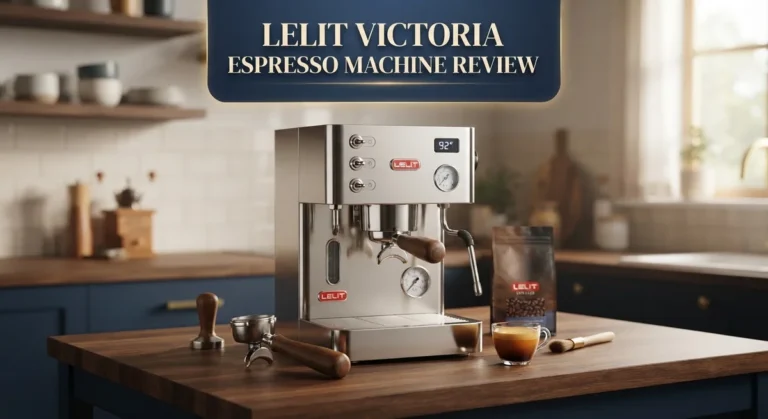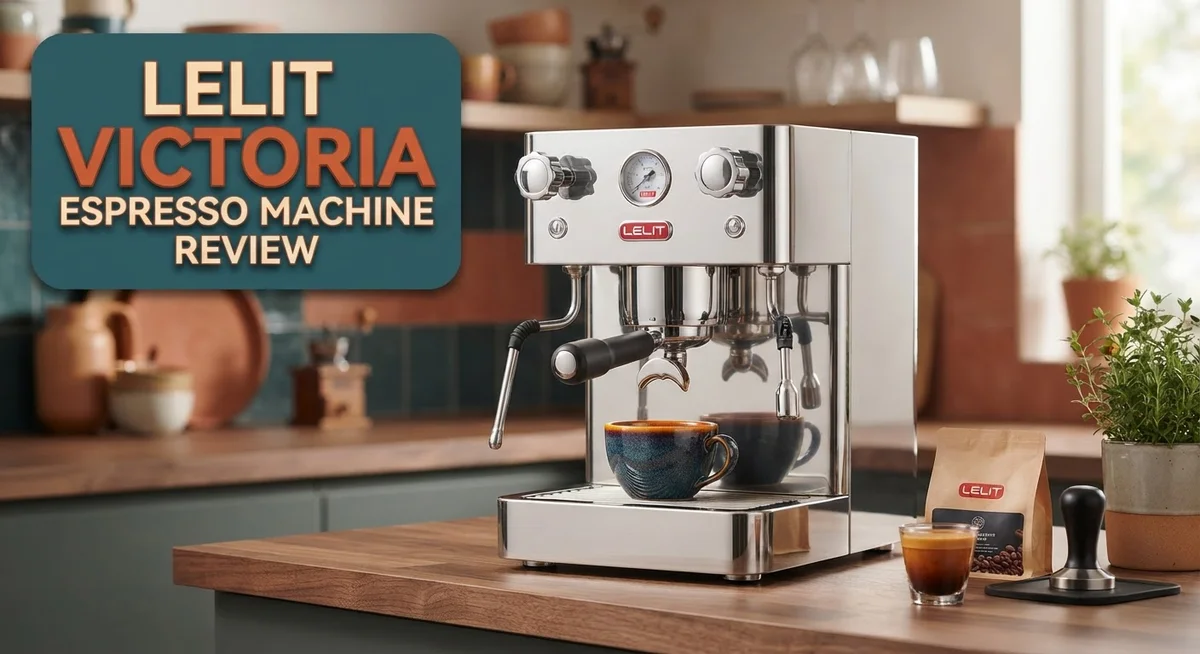
Lelit Victoria Espresso Machine Review: Performance & Comparison
Are you looking for a home espresso machine that actually performs like a pro model? The Lelit Victoria might be your answer. This machine brings serious power into a compact body.
It features a brass boiler and a solid steel frame. This build gives you strong heat retention and steady performance. You get a machine that feels durable in daily use.
The Victoria heats up fast. Most users see ready temperatures within 6 to 10 minutes. That means less waiting and more brewing.
Its 58mm portafilter matches industry standards. This makes it easy to upgrade baskets or accessories later. You get flexibility without extra hassle.
This espresso machine suits people who enjoy the hands on process. It is a manual machine, so you control every part of the shot. That gives you room to experiment and improve your skills over time.
In this review, we will break down its specs, performance, and daily usability. We will also compare it to similar machines in its class. By the end, you will know if the Lelit Victoria fits your coffee routine.
In a Nutshell
The Lelit Victoria stands out as a solid choice for home baristas. Here is a quick summary of what makes it special.
-
Compact and sturdy: The shallow depth fits small kitchens easily. The steel frame feels tough and stays put on your counter.
-
Fast heat up: You can pull a shot in under 10 minutes. The steam wand reaches temperature quickly too, so you spend less time waiting.
-
Great shot quality: This machine pulls rich, flavorful espresso. The 300mL boiler holds enough water for consistent extraction.
-
Manual control: You control the brewing process by hand. This gives you room to experiment and improve your skills over time.
-
Some noise involved: The pump can be loud during operation. You may notice vibrations, especially on hard surfaces.
-
Single boiler limits: You cannot brew and steam milk at the same time. This makes it less ideal for households that need multiple milk drinks quickly.
Overall, the Victoria rewards patience and skill. It suits enthusiasts who enjoy the craft of espresso making, not just the result.
Build Quality and Materials
The Lelit Victoria uses materials that feel premium without unnecessary complexity. Its brass boiler sits at the core of the machine and handles heat distribution efficiently. Brass naturally resists corrosion and maintains stable temperatures during brewing sessions.
The frame combines solid steel with aluminum accents. This mix keeps the machine sturdy while staying reasonably light. You’ll notice the build feels substantial when you touch it, yet it doesn’t demand excessive counter space due to its compact footprint of just 23×38×38cm.
The portafilter follows the standard 58mm size. This means you can swap in aftermarket baskets or upgrade your accessories without compatibility headaches. The handle design balances comfort with durability, though repeated use will show wear over time like any manual machine.
Water tank and reservoir quality matter for daily use. The 2.5L tank holds enough water for multiple shots and steaming sessions before refilling. The plastic construction keeps weight down, though you’ll want to clean it regularly to prevent mineral buildup.
The group head receives attention to detail. It maintains heat stability thanks to the brass boiler design and reaches operational temperature around 22 minutes from a cold start. This consistency helps you pull reliable shots once you understand the machine’s rhythm.
Vibration and noise come from the pump mechanism. While this is normal for lever machines, the Victoria’s pump operates louder than some competitors. The vibration transfers slightly to your counter, so placement matters if you have sensitive surfaces nearby.
The cup warmer sits on top of the machine. It’s a simple addition that keeps your cups at serving temperature without electronic controls. This reflects the machine’s straightforward design philosophy.
Overall durability depends on maintenance habits. Regular descaling and proper cleaning extend the lifespan significantly. The brass boiler resists common issues, and the steel frame withstands daily use well. Parts remain available through Lelit’s service network, making repairs practical if needed down the road.
The Victoria prioritizes honest construction over flashy features. Every component serves a purpose in the espresso extraction process.

- Classic Espresso: The Silvia has been in production for over 20 years-- making it one of the most stable espresso...
- Single Boiler: The single 12-ounce brass boiler serves both brew and steam temperatures.
Last update on 2026-10-28 / Affiliate links / Images from Amazon Product Advertising API
Heating System and Temperature Stability
The heating system in the Lelit Victoria uses a single brass boiler with a 300mL capacity. This design keeps the machine compact while still delivering consistent heat for espresso extraction. The brass material absorbs and distributes heat evenly across the group head.
Temperature stability depends on how you use the machine. The Victoria reaches brewing temperature in 6 to 10 minutes from a cold start. However, the group head itself takes around 22 minutes to reach full thermal stability. This means your first shot may taste slightly different from your second or third.
Brass boilers excel at temperature consistency once they reach equilibrium. The material naturally resists sudden temperature swings. You will notice stable extraction temperatures after the machine settles into operation. This matters because espresso quality relies heavily on precise heat.
The single boiler creates one limitation. You cannot brew espresso and steam milk simultaneously. Instead, you must wait for the group head to cool slightly before switching to steam mode. The Victoria does heat quickly for steaming, which keeps this transition brief.
Temperature surfing is a technique some users employ with single boiler machines. You pull the portafilter out at specific moments to adjust group head temperature. The Victoria’s quick heat recovery makes this approach work reasonably well if you want more control.
The machine includes a cup warmer on top. This preheats your cups and helps maintain shot temperature during the brewing process. Warmed cups prevent thermal shock when you pour hot espresso into them.
Water quality affects long term stability. The 2.5L tank provides enough capacity for several shots before refilling. Descaling the boiler every few months keeps mineral buildup from disrupting heat transfer.
The Victoria rewards patience during warm up. Rushing into shots before full stabilization produces inconsistent results. Serious home baristas appreciate this because it teaches proper machine management. The brass boiler responds predictably once you understand its heating curve, making temperature control learnable rather than mysterious.
Shot Quality and Espresso Performance
The Lelit Victoria delivers consistent, flavorful shots when you understand its single boiler mechanics. This machine pulls espresso with excellent body and crema because the brass boiler maintains stable temperatures once it reaches equilibrium.
Shot quality depends on your technique. The 58mm portafilter accepts standard baskets, so you can experiment with different coffee beans and grind sizes. Dial in your grind slowly, and you will notice how the Victoria responds to small adjustments. Rich, balanced espresso emerges when you nail the tamping pressure and distribution.
The machine’s performance shines with lighter and medium roasts. You pull shots with clarity and complexity because the heating system does not overshoot temperatures. Darker roasts work too, but you need patience to find the sweet spot for each bean.
One key factor: wait for the group head to stabilize. The 6 to 10 minute warm up gets the boiler ready, but the group head needs closer to 22 minutes for full temperature stability. Rushing into shots before this point produces thin, sour results. Patience rewards you with sweeter, more balanced espresso.
The single boiler limits workflow. You cannot brew espresso and steam milk simultaneously without temperature adjustments. Some users employ temperature surfing, which means pulling a shot, then waiting for the boiler to heat up again before steaming. This adds steps, but experienced baristas manage it well.
Pump pressure sits at 9 bars, which falls within the standard range for espresso extraction. The pressure consistency stays solid throughout the shot, so you get even extraction and good crema development.
The Victoria does not have pre infusion or flow control features. You pull shots manually by opening the group head valve. This hands on approach means you control every variable. Beginners find this steep, but it teaches you how espresso actually works.
Overall, the Victoria produces quality shots. You get full bodied espresso with clean flavor when you invest time in learning the machine. It rewards skill and attention, not convenience.
Top 3 Alternatives
Gaggia Classic Pro

- Solid Steel Housing, Made in Italy
- 9 Bar Espresso Extractions

Last update on 2026-10-28 / Affiliate links / Images from Amazon Product Advertising API
The Gaggia Classic Pro gives you solid espresso performance without overwhelming complexity. This machine heats water quickly and produces good crema. You get a commercial-style group head that lets you use standard espresso baskets and filters.
The steam wand works well for milk frothing. Build quality feels sturdy for the price range. Many users appreciate how easy it is to maintain and clean. The portafilter design is straightforward, making it beginner-friendly while still offering room to improve your technique.
Breville Barista Express

- MANUAL HAND-TEXTURED MICROFOAM: The powerful steam wand on this cappuccino maker and latte machine is designed to...
- PRECISE DOSE GRINDING: Integrated precision conical burr grinder on bean-to-cup espresso machine grinds on demand to...
Last update on 2026-10-28 / Affiliate links / Images from Amazon Product Advertising API
This machine stands out because it includes a built-in grinder. You can grind beans and brew espresso without switching between devices. The grinder has many settings, so you can dial in your shots precisely.
The steam wand produces microfoam suitable for lattes and cappuccinos. The machine heats up relatively fast. Pressure is consistent and reliable. Many home baristas prefer this option because everything happens in one compact unit. Cleanup is straightforward, and the portafilter design feels comfortable to use.
Roka Espresso Machine

- [20 Bar Professional Extraction] Equipped with a 20 Bar pump and built-in pressure gauge, this semi automatic espresso...
- [Premium Stainless Steel Construction] Crafted with a stainless steel housing, this compact espresso machine is designed...
Last update on 2026-08-04 / Affiliate links / Images from Amazon Product Advertising API
Roka machines focus on simplicity and reliability. They typically feature manual or semi-automatic operation, which appeals to users who want hands-on control. The build quality is generally robust, with attention to detail in materials and construction.
These machines heat up quickly and maintain stable temperatures. The group head design accommodates standard baskets. Steam wand performance is adequate for milk-based drinks. Users often choose Roka for its straightforward approach and lack of unnecessary electronics. The learning curve is manageable, and the machine rewards good technique with consistent results.
Ease of Use and Learning Curve
The Lelit Victoria sits in the middle ground between automatic machines and fully manual espresso equipment. You need to learn proper technique, but the machine does not punish beginners harshly.
Starting out feels straightforward. The 58mm portafilter matches industry standards, so any grinder works with it. Water goes into the 2.5L tank. You flip the power switch. Within 6 to 10 minutes, the machine reaches basic operating temperature. The group head needs another 12 minutes or so to stabilize completely, but you can start pulling shots once the initial warm up finishes.
The real learning curve involves understanding single boiler operation. You cannot brew espresso and steam milk at the same time. This forces you to plan your workflow. Make your shot first. Then switch to steaming. Experienced users adapt quickly. New espresso enthusiasts sometimes find this rhythm takes a few weeks to master.
Tamping and dose control matter more here than with super automatic machines. The Victoria gives you direct feedback through the portafilter. Uneven tamping shows up immediately in your shot. Grind size becomes obvious when water flows too fast or too slow through the puck. This immediate feedback actually helps you improve faster than machines that hide these details.
Temperature management adds another layer. The brass boiler stabilizes well once heated, but rushing into shots before full equilibrium produces weak, sour espresso. Patience becomes your friend. Wait. Watch the steam wand. When consistent steam pours out smoothly, you know the machine is ready. Some users employ temperature surfing techniques to optimize extraction, but this remains optional.
The cup warmer on top serves a practical purpose. Pre warming your cups prevents thermal shock when you pour hot espresso. This small detail shows thoughtful design for real use.
Daily operation becomes second nature within two to three weeks. The Victoria rewards consistent practice. You develop muscle memory for tamping pressure, grind adjustments, and timing. Milk drinks require more attention than single shots, but the machine handles both well once you understand its single boiler nature. The learning process feels engaging rather than frustrating for most users.
Steaming Capability and Milk Frothing
The Lelit Victoria’s steam wand sits as one of the machine’s honest strengths and genuine limitations rolled into one.
The steam wand heats up fast. You’ll notice the temperature ramp happens quickly thanks to the brass boiler design. This means you can move from pulling a shot to steaming milk in just a few minutes. The wand itself uses a simple two-hole design that delivers solid steam power for milk work.
Here’s the real situation: the single boiler creates a workflow constraint. You cannot brew espresso and steam milk simultaneously. This matters most if you make daily milk drinks like cappuccinos or lattes. You’ll need to pull your shot first, then wait briefly for steam pressure to build, then froth your milk. It’s not a deal breaker, but it does require planning your workflow.
The steam wand produces decent foam quality. The pressure feels responsive and gives you control over milk texture. Users report that achieving velvety microfoam is possible with practice. The two-hole design isn’t the most sophisticated option on the market, but it performs reliably for home use.
One practical note: milk steaming works best when you understand the machine’s temperature dynamics. Since you’re working with a single boiler, the group head temperature drops slightly when you switch to steam mode. This is normal behavior. Experienced users factor this into their routine.
The wand’s positioning makes it accessible for standard pitcher sizes. You can comfortably position a milk pitcher without awkward angles. The design prioritizes function over fancy ergonomics.
For occasional milk drinks, the Victoria handles the job well. For someone making multiple milk based beverages back to back, the single boiler limitation becomes more noticeable. You’ll spend time waiting between drinks rather than working continuously.
The machine includes a cup warmer on top, which helps keep your cups at serving temperature while you work through the steaming process. This small feature adds practical value to your milk drink preparation.
Overall, the Victoria’s steam capability sits solidly in the prosumer range. It delivers competent results for home baristas willing to work within its single boiler design.
Pros and Cons
Pros
- Heats up in 6–10 minutes with fast steam temperature ramp for quick workflow
- Compact footprint and shallow depth fit easily into small kitchen spaces
- Pulls quality shots with consistent flavor when you dial in your technique
- Standard 58mm portafilter works with any grinder you already own
- Cup warmer included on top keeps your cups ready to serve
Cons
- Pump operates loudly with noticeable vibration during extraction
- Single boiler means you cannot brew and steam simultaneously without temperature adjustments
- Manual operation requires skill and practice to master consistent results
- Not ideal if you make multiple milk drinks daily due to workflow constraints
Who Should Buy It
The Lelit Victoria suits several distinct groups of espresso enthusiasts.
Home baristas who crave hands-on control find this machine rewarding. You get direct feedback on every shot. Tamping pressure, grind size, and timing all matter. If you enjoy the learning process and want to improve your technique, the Victoria teaches you through experience. The machine responds to your adjustments, which means you’ll develop real espresso skills.
Coffee lovers with limited kitchen space appreciate the compact footprint. The shallow depth fits easily on counters where other machines won’t squeeze in. You don’t sacrifice performance for size. The Victoria still pulls quality shots and steams milk effectively.
Single or couple households work perfectly with this machine. You make one or two espresso drinks at a time. The single boiler operation suits this workflow. If you occasionally want a cappuccino or latte, the Victoria handles it without frustration. The fast steam temperature ramp means you switch from brewing to steaming quickly.
Espresso enthusiasts upgrading from entry level machines find the Victoria a natural next step. You already understand basic espresso concepts. You want better build quality and faster warm-up times. Standard features like the 58mm portafilter and cup warmer feel like genuine upgrades. The machine respects your growing knowledge.
People who value consistency over convenience should consider this option. Manual machines demand your attention. You can’t simply press a button and walk away. But this involvement creates better results. Each shot becomes intentional, not automatic.
The Victoria isn’t ideal for busy households making multiple milk drinks daily. Workflow constraints exist with single boiler machines. If you need back-to-back cappuccinos for your family, this creates delays. The loud pump operation also matters if noise bothers you early mornings.
Patience and genuine interest in espresso matter more than anything else. The Victoria rewards engaged users. Casual coffee drinkers might find the learning curve unnecessary. But if you want to understand espresso deeply, this machine gets out of your way and lets you learn.
Final Verdict
The Lelit Victoria earns its place among prosumer espresso machines through solid engineering choices. Its brass boiler promises long term durability that casual plastic bodied machines cannot match.
This machine rewards patience. If you enjoy learning the craft of espresso, the Victoria becomes a trusted companion rather than a frustrating obstacle.
Compared to the Profitec Go, the Victoria offers similar performance with its own distinct character. Both machines share a single boiler design and comparable build quality, so your choice often comes down to personal preference in styling and brand loyalty.
For those wanting more simultaneous brewing and steaming flexibility, the Lelit Elizabeth presents a natural upgrade path. Its dual boiler system solves the workflow limitation that defines the Victoria experience.
Meanwhile, the Rancilio Silvia remains a solid entry point for beginners who want to test their interest in manual espresso before committing to a machine like the Victoria.
Who should walk away from this machine? Anyone expecting one touch convenience or fully automated milk texturing will find the learning curve frustrating. This machine demands attention and rewards those who give it.
Who should say yes? Anyone ready to treat espresso making as a skill worth developing will find real satisfaction here. The Victoria does not hide its manual nature. It embraces it.
Final thought: the Lelit Victoria delivers genuine prosumer performance in a compact body. It suits kitchens with limited space and baristas with growing skill sets equally well.
Choose this machine if you want a long term relationship with your espresso routine. Skip it if convenience matters more than craft. Either way, the Victoria stands as an honest, well built option in its category.
Frequently Asked Questions
How long does the Lelit Victoria take to heat up?
The group head reaches brewing temperature in about 22 minutes from a cold start. The boiler itself warms up faster, around 6 to 10 minutes. This means you can start steaming milk sooner than you can pull your first shot. Plan for a quick coffee break if you’re in a hurry.
Can I brew and steam at the same time?
No. The Victoria has a single boiler, so you must choose one function at a time. After pulling a shot, you need to wait for the boiler to heat back up before steaming milk. This workflow suits single espressos and occasional cappuccinos better than high-volume milk drink production.
What grinder should I use with this machine?
Any grinder works since the Victoria uses a standard 58mm portafilter. Burr grinders give you the consistency you need for dialing in shots properly. The machine rewards precision, so invest in a good grinder if you don’t already own one.
Is the Lelit Victoria loud during use?
Yes, the pump operates noticeably loud with vibration during extraction. If noise bothers you or your household, this machine may frustrate you. Some users place it on a vibration dampening mat to reduce sound transfer to countertops.
Who should skip this machine?
Anyone wanting fully automatic milk texturing or one touch convenience should look elsewhere. Busy households making multiple milk drinks daily will find the workflow tedious. This machine demands patience and genuine interest in hands on espresso making.

Sanji brings years of expertise in kitchen equipment evaluation, combining practical testing with in-depth research to deliver reliable recommendations. His mission is to simplify kitchen shopping decisions through comprehensive reviews and expert comparisons.