Breville Espresso Machine Grinder Review: Worth your Money?
Good coffee starts with a good grind. That’s where Breville espresso machines truly shine.
Breville built its reputation on blending quality with simplicity. Their espresso grinders prove this every single day.
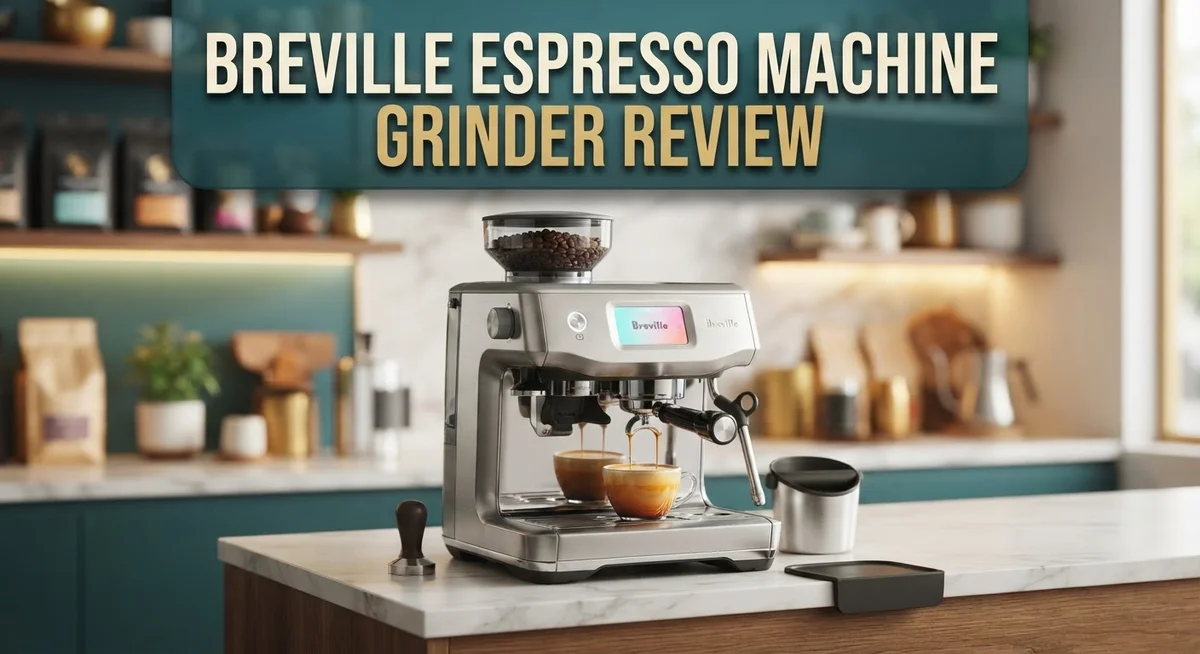
The Barista Express packs an integrated conical burr grinder right into the machine. You get 16 grind settings for quick espresso dialing.
Want more control? The Smart Grinder Pro offers 60 grind settings and an 18oz bean capacity. It fits both 50-54mm and 58mm portafilters with ease.
Grind quality matters more than most people think. A consistent grind means better extraction and richer flavor in every cup.
These grinders deliver speed too. Some models grind at 2.1 grams per second on pour-over settings.
But do they work for everyone? Espresso purists have raised questions about the Barista Express grinder. Coarser settings can also show some performance dips.
This review breaks down everything you need to know. We’ll cover specs, pros, cons, and how these machines compare to competitors like Baratza and Kingrinder.
By the end, you’ll know exactly which Breville grinder fits your coffee routine. Let’s get into the details.
In a Nutshell
Here is the quick summary for busy readers who want the core facts fast.
-
The Barista Express brings an integrated grinder and espresso machine together in one body. It offers 16 grind settings for daily use.
-
The Smart Grinder Pro stands out with 60 grind settings. It holds 18oz of beans and fits both 50-54mm and 58mm portafilters.
-
Both grinders use conical burrs. This design keeps grind quality consistent across most settings.
-
Grinding speed is a strong point. You get about 2.1g per second at pour-over settings, which saves time each morning.
-
Some espresso enthusiasts feel the Barista Express grinder falls short for pure espresso work. Performance can dip at coarser grind levels too.
-
Maintenance is simple but necessary. Vacuum the hopper every two to three weeks and clean the burrs every two to three months.
-
Competitors like the Baratza Virtuoso+ and Kingrinder K6 offer alternative paths if you want more settings or a hand grinder option.
These points give you a clear picture before we dive deeper into performance, setup, and daily use.
Grind Settings and Burr Quality
Breville’s grinder lineup shows clear differences in burr quality and grind range. The Barista Express uses conical burrs built into the machine body. This integration keeps your counter space small. The Smart Grinder Pro also features conical burrs but sits as a standalone unit with more flexibility.
Conical burrs matter because they crush beans instead of chopping them. This approach produces consistent particle sizes. You get fewer fines (tiny dust particles) that can over-extract and make espresso taste bitter. Consistency is everything when you’re pulling shots.
The Smart Grinder Pro delivers 60 grind settings. This range spans from fine espresso all the way to coarse pour-over grinds. You can dial in with precision. The Barista Express offers 16 settings, which sounds limited but covers the espresso range adequately for most home users.
Where things get tricky is performance at different settings. Real-world testing shows the Smart Grinder Pro maintains excellent consistency across its entire range. The Barista Express performs brilliantly for espresso but shows performance drops when you push toward coarser settings. This matters less if you only make espresso. It matters more if you want one grinder for multiple brewing methods.
Burr quality also depends on maintenance. Both models use burrs that need regular care. You should clean the burrs every 2 to 3 months. The hopper vacuum should run every 2 to 3 weeks to prevent bean oils from building up. Neglecting this causes stale grounds to stick inside, which affects taste.
The grinding speed is fast on both units. At pour-over settings, the Smart Grinder Pro grinds at 2.1 grams per second. This speed saves time during your morning routine.
Bottom line: Choose the Barista Express if you make only espresso and value simplicity. Pick the Smart Grinder Pro if you want flexibility across brewing methods and prefer standalone equipment. Both deliver solid burr quality when maintained properly.

- The Breville Smart Grinder Pro includes 60 unique settings – this programmable conical burr grinder offers a wide...
- DOSING IQ: Precision digital time allows you to adjust and program grind time in 0.2 second increments giving you total...

Last update on 2026-10-27 / Affiliate links / Images from Amazon Product Advertising API
Build Quality and Design
Breville’s espresso grinders stand out because of how they’re built. The machines use conical burrs that crush beans rather than chop them. This matters because crushing creates uniform particle size, which pulls better espresso shots.
The Barista Express houses its grinder inside the machine body. This all in one design saves counter space. The grinder sits right above the group head, so ground coffee drops straight into your portafilter. Setup is simple and compact.
The Smart Grinder Pro takes a different approach. It’s a standalone unit with a larger 18oz bean hopper. This design lets you grind separately from brewing. You can prepare beans ahead of time or switch between coffee types without refilling the hopper constantly.
Build materials matter here. Both units use metal burr chambers and plastic hoppers. The metal construction keeps heat down during grinding. Plastic hoppers are lightweight and easy to remove for cleaning. The overall feel is solid without being heavy.
Portafilter compatibility affects your experience too. The Smart Grinder Pro fits both 50 54mm and 58mm portafilters. The Barista Express works with its own 54mm basket. This flexibility matters if you own multiple machines or plan upgrades later.
The grind mechanism operates smoothly on both models. Grinding speed reaches 2.1 grams per second at coarser settings. This speed means your morning routine stays quick. The burrs engage without jamming or stuttering.
One design consideration: maintenance access. Both grinders require regular cleaning. You’ll vacuum the hopper every 2 3 weeks and clean burrs every 2 3 months. Breville designed both units with removable hoppers and burr chambers to make this easier.
The Barista Express grinder does show performance drops at very coarse settings. Espresso enthusiasts sometimes feel this limits versatility. The Smart Grinder Pro handles the full range more evenly. If you grind for both espresso and pour over coffee, this matters.
Overall, Breville prioritizes practical design over flashy aesthetics. The machines feel built to last through daily use. They’re not the lightest or most compact grinders on the market, but they’re engineered for reliability.
Grinding Performance and Speed
When you grind beans for espresso, speed and consistency work together. Breville’s grinders excel at both, but they perform differently based on your settings.
The Smart Grinder Pro grinds at 2.1 grams per second when you use coarser settings like pour-over. This speed means you spend less time waiting and more time brewing. The Barista Express grinds faster for espresso-specific work because its burrs are optimized for fine, tight settings.
Consistency matters more than raw speed for espresso. Both models use conical burrs that crush beans rather than chop them. This crushing action produces uniform particle size, which helps water flow evenly through your puck. Uneven grinds lead to channeling and weak shots.
Here’s where performance shifts: the Smart Grinder Pro maintains excellent consistency across its 60 settings. You can dial from espresso-fine all the way to French press coarse without losing quality. The Barista Express performs brilliantly at fine espresso settings but shows some performance drops when you move toward very coarse grounds.
Real-world grinding takes about 10 to 15 seconds for a single espresso dose on the Barista Express. The Smart Grinder Pro needs roughly the same time for espresso but shines when you want to grind larger batches for multiple cups or different brewing methods.
Burr maintenance affects speed and consistency over time. Both grinders need regular care. Clean your burrs every 2 to 3 months by running rice through them or using a commercial cleaning product. Vacuum the hopper every 2 to 3 weeks to remove old bean oils and dust.
The grinding performance you get depends on what you brew most often. If you make only espresso, the Barista Express delivers fast, consistent results without fuss. If you switch between espresso and pour-over, the Smart Grinder Pro adapts better because its broader setting range keeps consistency high across all brew styles.
Top 3 Alternatives
Baratza Sette 270

- SPECIALTY COFFEE ASSOCIATION AWARD WINNING GRINDERS - Baratza grinders are preferred by coffee professionals and backed...
- DOSING - 3 programmable dosing buttons for accurate, consistent dosing to within a 10th of a second. This allows you to...
Last update on 2026-10-27 / Affiliate links / Images from Amazon Product Advertising API
The Baratza Sette 270 offers precise grinding control for espresso lovers. This grinder features micro-adjustments that let you dial in your shots with accuracy. The burr system delivers consistency from one cup to the next.
You get fast grinding speeds with this model. The hopper holds enough beans for multiple shots. Cleanup is straightforward since the burrs come out easily. Many users appreciate how quickly they can adjust settings between different espresso recipes.
Gaggia Classic Pro

- Solid Steel Housing, Made in Italy
- 9 Bar Espresso Extractions
Last update on 2026-10-27 / Affiliate links / Images from Amazon Product Advertising API
The Gaggia Classic Pro combines an espresso machine and grinder in one compact unit. This all-in-one approach saves counter space in smaller kitchens. The machine heats up rapidly, so you spend less time waiting for your drink.
The built-in grinder works well for beginners learning espresso basics. You can adjust grind size to match your brewing method. Steam pressure is adequate for milk-based drinks. The portafilter design feels comfortable in your hand during tamping and extraction.
Rancilio Silvia Espresso Machine

- PID Accuracy: Digital temperature management offers higher accuracy, to-the-degree temperature control, and quicker...
- Pre-Infusion: Programmable infusion and dwell time makes shots easier to pull and more repeatable.
Last update on 2026-10-27 / Affiliate links / Images from Amazon Product Advertising API
The Rancilio Silvia stands out for serious home baristas. This machine delivers stable temperature control during brewing. The commercial-style group head provides excellent heat stability between shots.
You’ll notice the solid construction throughout this model. The steam wand produces quality microfoam for lattes and cappuccinos. Build quality remains impressive even after years of daily use. Many espresso enthusiasts choose this machine because it performs like professional equipment without the professional price tag. The learning curve is moderate, making it suitable for intermediate users ready to improve their technique.
Ease of Use and Maintenance
Breville espresso grinders make daily use straightforward. Both the Barista Express and Smart Grinder Pro feature intuitive controls that don’t require a learning curve. You dial your setting, press a button, and the machine does the work.
Cleaning and upkeep form the real story here. The Barista Express needs hopper vacuuming every 2 to 3 weeks to remove stuck grounds and oils. This takes just a few minutes with a small brush or cloth. The Smart Grinder Pro follows the same schedule for hopper maintenance since bean residue accumulates in both models.
Burr cleaning happens less often but matters more. Plan for deep burr cleaning every 2 to 3 months on either unit. The Smart Grinder Pro makes this easier because you can access the burr chamber from the top. The Barista Express requires you to remove the grinder from the machine body, which adds a few extra steps but remains manageable for most users.
Portafilter attachment affects your maintenance routine too. The Barista Express connects directly to the machine, so no detaching happens between grinds. The Smart Grinder Pro accepts multiple portafilter sizes (50 to 54mm and 58mm), meaning you might swap attachments if you use different machines. Each swap requires a quick wipe to prevent cross-contamination of grind sizes.
Daily operation feels nearly identical on both models. You load beans into the hopper, select your grind size, and start grinding. The Smart Grinder Pro’s 60 settings give you more precision, but the Barista Express keeps things simple with 16 options. Neither machine produces excessive noise or mess during grinding.
One practical note: the Barista Express integrated design means less equipment to store and clean. The Smart Grinder Pro sits separately, which requires counter space but offers flexibility if you own multiple espresso machines. Both grinders perform consistently when you follow basic maintenance schedules. Neglecting these routines causes performance drops and affects grind quality over time.
Versatility Across Brewing Methods
Breville espresso grinders shine when you switch between different brewing styles. The Smart Grinder Pro offers 60 grind settings that span from fine espresso to coarse French press. This range lets you experiment with pour-overs, Aeropress, and Moka pots without buying separate equipment.
The Barista Express takes a simpler approach with 16 grind settings. While fewer options exist, these settings still cover espresso through medium-coarse grounds. The integrated design means you grind and brew in one machine, which streamlines your workflow.
Performance varies across the range on both models. At finer espresso settings, both grinders deliver consistent results. When you move to coarser settings like pour-over, the Smart Grinder Pro maintains excellent consistency. The Barista Express shows some performance drops at very coarse levels, but most home brewers won’t notice this in daily use.
Grinding speed adapts to your brewing method too. The Smart Grinder Pro grinds at 2.1 grams per second when using coarser settings. This speed advantage matters when you brew multiple cups. For espresso, a single dose takes about 10 to 15 seconds on the Barista Express.
Portafilter compatibility affects your versatility options. The Smart Grinder Pro fits both 50-54mm and 58mm portafilters, giving you flexibility across different espresso machines. The Barista Express works only with its own portafilter, which limits expansion possibilities.
Maintenance requirements stay consistent regardless of brewing method. Burr cleaning happens every 2-3 months on both units. Hopper vacuuming every 2-3 weeks prevents bean dust buildup. Regular care keeps your grinder performing well across all settings.
Choose the Smart Grinder Pro if you brew multiple methods regularly. Its 60 settings and faster grinding speed make switching between espresso and pour-over seamless. Pick the Barista Express if you focus mainly on espresso and want everything in one compact unit. Both machines handle versatility well, but your brewing habits should guide your decision.
Pros and Cons
Pros
- Excellent grind quality and consistency across espresso and other brewing methods
- Easy to use with straightforward daily operation on both models
- Fast grinding speed (2.1 grams per second) saves time during preparation
- Compact design takes up minimal counter or cabinet space
- Wide grind range lets you switch between espresso, pour-over, and V60 without hassle
Cons
- Barista Express built-in grinder receives criticism from serious espresso enthusiasts who prefer standalone units
- Performance drops noticeably when you use the coarser grind settings
- Regular maintenance is required including hopper vacuum cleaning every 2 to 3 weeks and burr cleaning every 2 to 3 months
Who Should Buy It
You should buy a Breville espresso grinder if you fit into one of these categories.
Home baristas who want simplicity work well with the Barista Express. This machine handles everything in one unit. You grind and brew without switching between separate tools. The 16 grind settings cover espresso basics without overwhelming you. This setup appeals to people who value convenience over endless customization.
Coffee enthusiasts who brew multiple ways benefit more from the Smart Grinder Pro. You get 60 grind settings for serious experimentation. Switch between espresso, pour-over, and V60 without compromise. The conical burrs deliver consistent results across all these methods. This grinder fits both 50-54mm and 58mm portafilters, giving you flexibility with different machines.
People with limited counter space appreciate the compact design of either model. Both grinders occupy minimal room while delivering professional-level performance. You don’t sacrifice quality because of your kitchen constraints.
Daily coffee drinkers who value speed gain from the fast grinding performance. At 2.1 grams per second, preparation moves quickly. You spend less time grinding and more time enjoying your cup.
Users who don’t mind regular maintenance should proceed with confidence. Both models require hopper vacuuming every 2 to 3 weeks and burr cleaning every 2 to 3 months. This routine care keeps your grinder performing at its best. If you’re willing to invest time in upkeep, you’ll get consistent results.
Avoid these grinders if you’re an espresso purist seeking a standalone burr grinder. The Barista Express built-in grinder receives criticism from serious enthusiasts. They prefer dedicated grinding equipment separate from brewing machines. Performance also drops noticeably at coarser settings on both models. If you primarily grind for pour-over at coarse levels, look elsewhere.
Choose based on your brewing habits and willingness to maintain your equipment. The Barista Express suits simplicity seekers. The Smart Grinder Pro rewards versatile brewers. Either way, you get a grinder that performs well for everyday use.
Final Verdict
Breville espresso grinders stand out as smart choices for home coffee lovers. They combine strong grind quality with everyday convenience.
Both models prove that you don’t need a professional setup to enjoy great coffee at home. Consistency remains their biggest strength.
If you love trying new brew methods, the Smart Grinder Pro gives you room to experiment. Its wide range of settings supports growth as your coffee skills improve.
The Barista Express suits anyone who wants one machine that does it all. You skip the hassle of pairing separate devices together.
Think about your long term coffee goals before you decide. Your daily habits matter more than specs on a page.
Some espresso purists may still prefer a standalone grinder. If that’s you, models like the Baratza Virtuoso+ could feel more rewarding.
Budget conscious buyers exploring manual options might also look at the Kingrinder K6. It offers a different experience but demands more effort per cup.
For those who want a simpler alternative machine, the Breville Bambino remains worth exploring separately. It serves a different type of user than the grinder equipped models.
Every product has trade offs. Breville’s grinders trade some flexibility for simplicity and speed. That trade usually works in favor of home users.
Cleaning and upkeep never feel overwhelming once you build a routine. Most users adapt quickly and see it as part of the coffee ritual.
In the end, your brewing style should guide your choice. Both Breville models reward users who value steady performance and easy operation.
Pick the one that matches how you already make coffee. That decision alone will shape your satisfaction more than any feature list.
Breville continues to deliver machines that make coffee making simple and enjoyable. For most home baristas, that combination makes these grinders easy to recommend.
Frequently Asked Questions
Can I use a Breville grinder with any espresso machine?
The Smart Grinder Pro works with most espresso machines because it fits both 50-54mm and 58mm portafilters. This flexibility makes it a standalone option you can pair with different machines.
The Barista Express grinder is built into the machine itself. You cannot remove it and use it separately with another espresso maker.
How often do I need to clean a Breville espresso grinder?
You should vacuum the hopper every 2 to 3 weeks to remove old bean oils and dust. This keeps your grinder running smoothly and prevents flavor buildup.
Deep burr cleaning happens every 2 to 3 months. This removes ground coffee residue from inside the grinder. Regular maintenance keeps your grind quality consistent and extends the machine’s life.
What’s the difference between 16 grind settings and 60 grind settings?
The Barista Express has 16 settings, which covers espresso through coarser brews. Most home brewers find this range sufficient for daily coffee.
The Smart Grinder Pro offers 60 settings for finer control. If you frequently switch between espresso, pour-over, and V60, the extra settings let you dial in each method more precisely.
Does the Barista Express grinder work well for espresso?
The built-in grinder produces consistent grounds for espresso. However, serious espresso enthusiasts often prefer a standalone burr grinder for better control and performance.
The grinder performs best at finer settings. Performance drops when you move toward coarser settings, which matters less for espresso brewing but more if you want versatility.

Sanji brings years of expertise in kitchen equipment evaluation, combining practical testing with in-depth research to deliver reliable recommendations. His mission is to simplify kitchen shopping decisions through comprehensive reviews and expert comparisons.