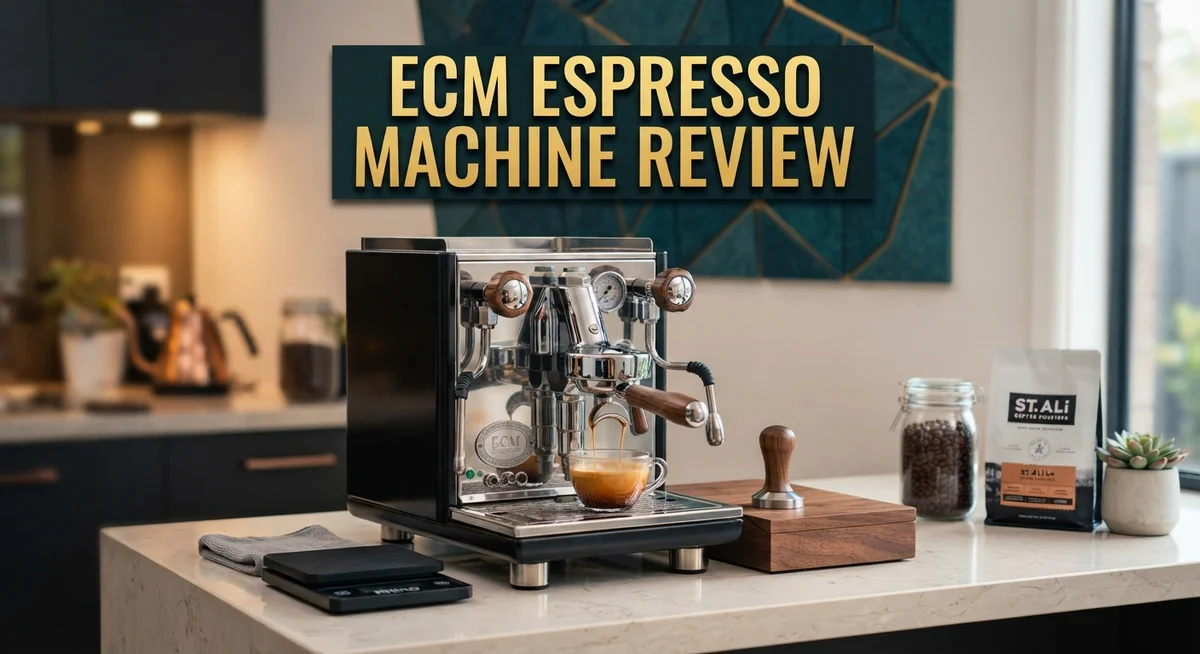
ECM Espresso Machine Review: Features & Performance
Espresso lovers know one truth. The right machine makes or breaks your morning brew. That’s where ECM steps in.
ECM espresso machines build a strong reputation among coffee fans. They pack German engineering into every unit. You get copper boilers, clean internal wiring, and solid steel frames.
This review looks closely at ECM’s lineup. We cover the Synchronika, Mechanika V Slim, and Mechanika Max. Each model brings something different to your countertop.
Dual boiler options let you brew and steam at the same time. Some models feature the famous E61 group head. Others include PID controls for precise temperature settings.
Durability stands out as a major highlight. Many owners report years of daily use without a single hiccup. The build quality feels premium from the first pull.
No machine is perfect though. ECM models need regular descaling to stay in top shape. Some units also skip flow control features found on pricier competitors.
We’ll compare ECM against brands like La Marzocco and Lelit. By the end, you’ll know if an ECM machine fits your home barista dreams.
In a Nutshell
Here’s the quick scoop on ECM espresso machines. We break down what makes them worth your attention.
-
Solid engineering stands at the core of every ECM model. You get copper boilers that heat evenly and last for years.
-
E61 group heads appear on select models. This design keeps brew temperatures stable, shot after shot.
-
PID controllers give you precise control over water temperature. Some models include this feature for better consistency.
-
Internal wiring stays clean and organized. This design choice makes repairs easier down the road.
-
Maintenance matters with these machines. You should descale every three to six months, depending on your water hardness.
-
Flow control is missing on some models. This might disappoint espresso enthusiasts who like adjusting extraction pressure manually.
-
Competitors like La Marzocco Linea Micra and Lelit Mara X offer similar features. ECM still holds its own with unique design choices.
ECM machines suit coffee drinkers who value long term reliability. They work well for people ready to handle routine upkeep.
Build Quality and Design Innovation
ECM espresso machines stand out for their thoughtful engineering approach. The brand focuses on creating machines that last through years of daily use. Users report their ECM units running smoothly for over three years without major problems. This reliability comes from smart material choices and careful assembly.
The copper construction forms the backbone of ECM’s design philosophy. Copper conducts heat efficiently, which means your water reaches the right temperature quickly. This material choice also resists corrosion over time. The result is a machine that performs consistently, year after year.
What makes ECM different is their clean internal layout. Wiring stays organized and minimal inside the machine. This design choice makes repairs easier when needed. It also reduces the chance of electrical problems developing down the line. You won’t find tangled cables or messy construction inside an ECM unit.
The dual boiler models deserve special attention here. These machines have two separate boilers, one for brewing and one for steaming. This setup lets you brew espresso and steam milk at the same time. You never wait for the machine to switch modes. Temperature stays stable because each boiler does its own job.
ECM includes E61 group heads on certain models. This classic design distributes water pressure evenly across your coffee grounds. The result is more balanced extraction. Your shots taste more consistent from one pull to the next.
PID temperature control appears on select models too. These controllers monitor water temperature constantly. They adjust heating elements to keep temperatures exact. This precision matters when you’re dialing in espresso shots. Even small temperature swings can change how your coffee tastes.
The design innovation extends to how heat moves through the machine. ECM engineers the flow paths carefully. Water travels through the group head smoothly. Steam reaches the wand with proper pressure. Every component serves a purpose in the overall system.
One design trade off exists though. Some ECM models skip flow control features. Flow control lets you adjust water pressure during brewing. Without it, you have less flexibility in how you extract your shots. This limitation affects certain models more than others.
Overall, ECM machines show genuine attention to detail. The build quality reflects years of espresso machine experience. Every choice, from materials to internal layout, supports long term performance and reliability.

- PID Temperature Control - View and adjust your steam boiler temperature quickly with the front-mounted PID screen.
- Shot Timer - When brewing, the PID screen doubles as a shot timer to monitor your espresso progress.
Last update on 2026-10-28 / Affiliate links / Images from Amazon Product Advertising API
Boiler Systems and Temperature Control
ECM espresso machines use sophisticated boiler systems that separate brewing and steaming functions. The dual boiler setup stands as a key feature across their lineup. This design lets you brew espresso while steaming milk simultaneously without temperature swaps.
The copper boilers in ECM machines conduct heat efficiently and maintain stability over time. Copper absorbs and releases heat predictably, which helps achieve consistent shot quality. This material choice reflects ECM’s engineering philosophy of reliability through smart material selection.
Temperature control on ECM models varies by series. Select models include PID controllers that monitor boiler temperature with precision. These controllers adjust heating elements automatically to keep water at your exact target temperature. This eliminates the guesswork from manual temperature management.
The E61 group head appears on certain ECM models and plays a crucial role in temperature stability. This group head design includes internal water channels that pre-warm incoming water. The result is more consistent extraction and better shot repeatability from pull to pull.
Heat management in ECM machines shows careful attention to design details. Water pathways stay organized and efficient throughout the system. The clean internal layout means fewer temperature fluctuations caused by wiring or poor component placement. This directly impacts the quality of your espresso shots.
Single boiler models on ECM’s entry level still deliver solid temperature control. You’ll need to wait between brewing and steaming, but the temperature stability remains strong. Many home baristas find this acceptable for their workflow.
Regular descaling becomes important with ECM boiler systems. Water hardness determines descaling frequency, typically every 3 to 6 months. Hard water builds mineral deposits faster and requires more frequent cleaning. Soft water extends the time between descaling cycles.
The dual boiler advantage shines during busy mornings. You pull shots while simultaneously steaming milk for lattes or cappuccinos. No temperature recovery time means faster workflow and multiple drinks without delays.
ECM’s boiler engineering prioritizes longevity and performance consistency. Users report machines running flawlessly for 3+ years of daily use. This durability stems from the robust boiler design and quality copper construction throughout.
Temperature precision matters for espresso enthusiasts who chase perfect extraction. ECM’s boiler systems give you the tools to dial in your shots accurately. Whether you choose a single or dual boiler model, ECM delivers reliable heat management that supports excellent espresso quality.
Group Head Technology and Brewing Performance
ECM’s group head technology forms the foundation of their brewing performance. The E61 group head appears on many ECM models and delivers exceptional thermal stability. This design helps water maintain consistent temperature as it flows through the group head and into your coffee puck.
The group head works together with ECM’s boiler systems to create precise brewing conditions. When you pull a shot, the group head absorbs heat from the boiler and releases it steadily. This steady heat release prevents temperature swings that can ruin extraction quality.
Thermal mass plays a key role here. ECM uses substantial copper construction in their group heads. Copper absorbs and distributes heat evenly across the entire brewing surface. Your espresso extracts more uniformly because the temperature stays stable from the first drop to the last.
Dual boiler models give you a major advantage for group head performance. One boiler handles brewing while the other manages steam. This separation means your brewing temperature never fluctuates when you steam milk. The group head stays locked at your ideal brewing temperature throughout your entire session.
PID temperature control on select ECM models lets you dial in your exact brewing temperature. You see the real temperature on a display and adjust it precisely. Different coffee beans and roast levels need different temperatures. This control helps you pull shots that taste exactly how you want them.
The group head design also affects water flow dynamics. ECM engineers the internal passages to distribute water evenly across the coffee puck. Uneven water distribution creates channeling, which ruins your shot. Even distribution means better extraction and more balanced flavor in your cup.
Some ECM models include flow control features. Flow control lets you adjust how fast water enters the group head. You can start slow to allow pre infusion, then increase flow for the main extraction. This technique produces sweeter, more complex shots with less bitterness.
Maintenance impacts group head performance over time. Regular cleaning prevents coffee oil buildup inside the group head. Descaling removes mineral deposits that block water passages. ECM group heads reward consistent care with reliable, repeatable brewing performance year after year.
Top 3 Alternatives
Gaggia Classic Pro

- Solid Steel Housing, Made in Italy
- 9 Bar Espresso Extractions

Last update on 2026-10-28 / Affiliate links / Images from Amazon Product Advertising API
The Gaggia Classic Pro is a compact espresso machine that works well for home baristas. It heats water quickly and produces decent crema on your shots. The machine has a simple design with manual controls. You steam milk by hand using the wand. Many users love how affordable this option is while still making real espresso.
This machine needs some learning time. You’ll practice your tamping and timing skills. The small water tank means refilling often. It’s perfect if you have limited counter space and want to start your espresso journey without complexity.
Breville Barista Express

- MANUAL HAND-TEXTURED MICROFOAM: The powerful steam wand on this cappuccino maker and latte machine is designed to...
- PRECISE DOSE GRINDING: Integrated precision conical burr grinder on bean-to-cup espresso machine grinds on demand to...
Last update on 2026-10-28 / Affiliate links / Images from Amazon Product Advertising API
The Breville Barista Express brings built-in grinding to your espresso routine. This machine grinds beans right before you brew. You adjust the grind size with a dial on the machine itself. The steam wand heats milk quickly and froths it well.
This option costs more than basic machines but saves you from buying a separate grinder. The automatic milk frother makes cappuccinos and lattes easier to make. The machine has a larger water tank so you refill less often. It’s great for people who want convenience and consistency in their daily cups.
Rancilio Silvia Espresso

- Classic Espresso: The Silvia has been in production for over 20 years-- making it one of the most stable espresso...
- Single Boiler: The single 12-ounce brass boiler serves both brew and steam temperatures.
Last update on 2026-10-28 / Affiliate links / Images from Amazon Product Advertising API
The Rancilio Silvia is a semi-commercial style machine built for serious home use. It has a solid metal body and professional components inside. The steam wand is powerful and responsive. You get real control over your brewing process.
This machine requires more skill and attention than others. You’ll need to manage water temperature manually. The learning curve is steeper, but results can be excellent once you master it. It’s ideal for espresso fans who want precision and durability in their equipment.
Maintenance Requirements and Durability
ECM espresso machines earn their reputation through genuine durability when you maintain them properly. Daily use for three or more years without major issues remains common among owners who follow basic care routines. This longevity stems from ECM’s commitment to solid engineering and quality materials throughout their machines.
Descaling forms your primary maintenance task with ECM machines. You should descale every three to six months, depending on your water hardness. Hard water accelerates mineral buildup inside the boiler and group head. Soft water extends the time between descaling sessions. ECM recommends using quality descaling solutions designed for espresso machines to avoid damaging internal components.
The copper boiler construction actually simplifies some maintenance aspects. Copper naturally resists corrosion better than some alternative materials. This means your boiler stays cleaner internally over extended periods. However, copper still requires regular attention to prevent scale accumulation that reduces heating efficiency.
Backflushing the group head keeps your machine performing at its best. You can backflush most ECM models to clear coffee oils and residue. This quick five minute task prevents buildup that affects shot quality and temperature stability. Some ECM models include flow control features that make backflushing easier and more effective.
The clean internal design ECM uses actually benefits long term maintenance. With minimal wiring and straightforward component layout, technicians can access parts easily if repairs become necessary. This simplicity reduces repair costs compared to machines with complex internal configurations.
Solenoid valve maintenance matters too. Check your solenoid valve annually for debris or mineral deposits. A malfunctioning solenoid affects water flow and temperature consistency. Cleaning or replacing it takes minimal time when you catch problems early.
Water quality directly impacts your maintenance schedule. Installing a quality water filter extends intervals between descaling sessions significantly. Filtered water reduces mineral deposits in the boiler and group head. This single step cuts your overall maintenance burden considerably.
ECM machines reward consistent care with reliable performance. You won’t face unexpected breakdowns if you descale regularly and backflush after each session. The dual boiler models require the same basic maintenance as single boiler versions. Following these simple routines keeps your ECM machine operating smoothly for many years.
Pros and Cons
Pros
- Proven durability that lasts 3+ years with daily use and minimal issues
- Excellent build quality with copper boilers that conduct heat efficiently and stay stable over time
- Clean internal design reduces wiring complexity and makes long term service easier
- Dual boiler models let you brew and steam simultaneously with precise temperature control
- Reliable performance when you follow a consistent maintenance routine
Cons
- Descaling every 3 to 6 months is essential depending on your water hardness level
- Some entry level models lack flow control features for advanced brewing adjustments
- Regular maintenance tasks like backflushing and solenoid valve care keep the machine running smoothly
Who Should Buy It
ECM espresso machines work best for people who want serious equipment that stands the test of time. If you brew espresso daily and expect your machine to perform consistently for years, ECM delivers exactly that.
Home baristas seeking precision find ECM models perfect for their needs. You get reliable temperature control and group head performance that lets you dial in your shots with confidence. The machines respond well to technique adjustments, so you can explore different brewing approaches and see real results.
You should buy an ECM machine if you’re willing to maintain it properly. These machines require regular descaling every 3 to 6 months depending on your water quality. Backflushing the group head and caring for the solenoid valve keep everything running smoothly. People who embrace routine maintenance see their ECM machines perform flawlessly for years. Those who skip maintenance will experience problems quickly.
Dual boiler models suit espresso enthusiasts who steam milk frequently. You can brew and steam at the same time without temperature swings. This matters if you make cappuccinos and lattes regularly alongside espresso shots.
ECM machines appeal to users who appreciate clean engineering and thoughtful design. The internal layout stays simple with minimal wiring complexity. This straightforward approach makes long term service easier and keeps repairs manageable.
People comparing ECM against competitors like La Marzocco Linea Micra or Lelit Mara X should know what sets ECM apart. You get copper boiler construction that conducts heat efficiently and maintains stability. The design innovation shows in every detail, from group head performance to internal organization.
Skip ECM if you want zero maintenance. These machines demand attention and care. You need to monitor water quality and descale regularly. Neglecting these tasks leads to performance drops and potential damage.
ECM works well for coffee lovers who view maintenance as part of the hobby, not a burden. You get a machine that rewards consistent care with reliable performance and excellent espresso shots. The build quality means your ECM machine becomes a long term investment that improves your daily coffee experience for years to come.
Final Verdict
ECM stands as a strong choice for anyone who values craftsmanship in their coffee routine. The brand builds machines that feel solid from the first pour to the thousandth cup.
Every model reflects careful engineering. You can feel this in how the machine operates day after day.
Synchronika and Mechanika lines each bring something different to your kitchen counter. Synchronika suits those chasing precision, while Mechanika offers simpler, sturdy operation.
When you compare ECM to brands like La Marzocco or Lelit, the choice often comes down to personal priorities. Some buyers want flashy tech features. Others want dependable, no nonsense performance.
ECM leans toward the second group. It gives you honest engineering without unnecessary complexity.
This brand rewards patience and attention. If you enjoy learning how your machine works, ECM becomes more than a kitchen appliance. It becomes a daily ritual you look forward to.
Espresso lovers who want a machine that feels personal will appreciate what ECM offers. It is not about flashy branding. It is about consistent, honest performance built to last.
Think about your daily coffee habits before deciding. If you brew often and enjoy the process, ECM fits naturally into your routine.
If you prefer machines that require zero thought, another brand might suit you better. ECM asks for your attention, but it gives back reliability in return.
Final thought: ECM machines earn their reputation through steady performance, not marketing hype. They reward users who treat espresso making as a craft, not a chore.
For coffee enthusiasts who enjoy the ritual, ECM delivers exactly what it promises. It stands as a dependable, well built option for anyone serious about home espresso.
Choose ECM if you want a machine that grows with your skills. It rewards curiosity and consistent care with years of steady, satisfying coffee.
Frequently Asked Questions
How often do I need to maintain my ECM espresso machine?
ECM machines need regular care to stay in top shape. Descaling is crucial every 3 to 6 months, depending on how hard your water is. Between descaling sessions, you should backflush the group head and check the solenoid valve. These quick tasks prevent mineral buildup and keep water flowing smoothly.
Can I brew espresso and steam milk at the same time?
Yes, but only with dual boiler models like the Mechanika Max. Single boiler machines force you to switch between brewing and steaming. Dual boiler systems let you do both simultaneously, which saves time when you’re making multiple drinks. This feature matters most if you steam milk frequently.
What makes ECM different from La Marzocco or Lelit machines?
ECM focuses on clean internal design and efficient copper construction. Their wiring is simpler than many competitors, making repairs easier down the road. The engineering reflects thoughtful choices rather than flashy features. La Marzocco and Lelit offer excellent machines too, but ECM rewards users who value long term reliability and hands on maintenance.
Do all ECM models have temperature control?
No. Some entry level models skip PID temperature control and flow control features. Higher end models like the Synchronika include both. Check the specific model before buying to ensure it matches your brewing needs.
Is an ECM machine right for me?
ECM suits home baristas who see maintenance as part of the hobby. If you want a machine that requires zero thought, look elsewhere. ECM machines reward attention and care with years of reliable performance.

Sanji brings years of expertise in kitchen equipment evaluation, combining practical testing with in-depth research to deliver reliable recommendations. His mission is to simplify kitchen shopping decisions through comprehensive reviews and expert comparisons.